Showing posts with label healthy. Show all posts

Friday, January 1, 2016

Papas de Navidad | Breakfast Potatoes

Stare at a blank sheet of paper smeared with ink, and you might detect a specific image. But show that same sheet of paper to someone else, and there is a good chance they will see a different image. Of course a psychologist will tell you that the Rorschach test tells us more about the viewers than the sheet of paper.

In many ways, the study of nutrition is similar. All that is needed is a few moments looking at various search engine results about diet and nutrition to see there are widely differing views on the best ways to eat. Add on top of this, the confusion that government agencies and industry lobbyists create, and suddenly it becomes clear why so many people view that ink stained paper in so many different ways.

However, I believe a consensus is slowly starting to form, and a specific image is becoming increasingly transparent to an increasing number of people. The consensus is, of course, in favor of a plant-based diet.

I know of no other diet, because not a single study exists, which can scientifically be shown to reverse heart disease, other than a plant-based diet. Increasingly, the leading experts on cancer are finding the benefits overwhelming as well, as evidenced by the recently statements made by the World Health Organization.

As we enter a new year, and as I enter my 9th year as a plant-based vegan, I can firmly state that the tide of the evidence for a plant-based diet is growing. And I believe that 2016 will only further support such a healthful message.

As we begin this year together, I remain optimistic, and I invite you all to join me on this journey as we move every away from the wilderness, and closer to living with longevity, intention, and peace.

***


Today’s recipe is called Papas de Navidad (or Christmas potatoes) because I made this dish for M when she got home from her 24-hour shift on Christmas day morning. This is a sweet and savory dish.

I chose to make this dish this Christmas because while we were spending our first Christmas living together, we were both away from our families, and while it is summer here, I’m told that traditional Argentine Christmas dishes tend to mimic the dishes of bewintered North America. As such, this dish incorporates some flavors of the North East, by using maple syrup, an ingredient which we brought to Argentina with us from New York when we moved, making it an extra special dish.


Papas de Navidad | Breakfast Potatoes
4 potatoes - cubed
2 large tomatoes or a handful of cherry tomatoes – cubed or halved
1 medium onion – chopped
1 small head broccoli – chopped
Spices
1.5 tablespoons maple syrup – save to the end
2 cloves of garlic – diced (Or 1 teaspoon of garlic powder)
1 teaspoon cumin
½ teaspoon turmeric
¼ teaspoon rosemary
¼ teaspoon oregano

As mentioned below,* I pre-boiled my potatoes for about 15 minutes until they became soft to pierce with a fork. While the potatoes are boiling, prepare the remaining vegetables. Once all of the veggies are prepared, toss them in a oven safe container (I like to use cast iron for this dish, as it adds a real country flavor to the vegetables) and generously spread the spices evenly throughout.**


Now cover the vegetables with tin foil and place into the oven on 350°. If you pre-boiled the potatoes as suggested, cook for an additional 15-20 minutes, depending on how browned you like your potatoes.

Once done, drizzle the vegetables with maple syrup. I served the dish with a large bunch of steamed kale and dried cranberries, which we also drizzled with maple syrup (don’t knock it until you try it). 

I hope everyone had a wonderful holiday season!
Feliz Ano Nuevo!


*I prepared the potatoes the night previously to help reduce the overall cook time by boiling them until almost soft.
** Pro Tip – Put the veggies and spices in a large container with a lid and shake the container for 10 seconds until the spices fully coat the veggies.

As always the information presented in this blog is for educational purposes only. It should not be considered as specific medical, nutritional, lifestyle, or other health-related advice.

Tuesday, September 1, 2015

Papas Bravas, Roasted Florets and Cheesy Dressing

It’s hard to believe that September is already here. In just a few more months M and I will be traveling back to the States for a visit so she can attend a medical conference. We are both looking forward to it, but for now we are enjoying the beginning of spring here in Buenos Aires.

This coming weekend we will be running the 21K Maraton de Buenos Aires. We are excited forward to it, as it should be a beautiful course, which goes right through the heart of our city. We will be running the course together. This will be my first race since moving, and unless I'm mistaken, my first event for 2015! Crazy, but it's been nice focusing on other things besides training and racing.

For today, I have a great recipe that can work as either a side-dish or the main course. It’s a blend of a two different dishes, a favorite in North America, the other a common dish from South America.


Papas Bravas (or Patatas Bravas if you’re from Spain,) are a common latin-style dish where typically white potatoes are cut into irregular shapes and then either roasted or fried in oil and served with a spicy or smoked aioli sauce. They are considered bar food, and are often part of a tapa menu - which means they're perfect for watching futbol or Argetnine-style gatherings where the first person arrives 40 minutes after they were suppose to, and the last person arrives when you were hoping everyone would be leaving! Of course the BYOL version is oil-free.

I use to make this dish in New York using the oven-roasted florets and cheesy sauce as a healthier play on the ever-popular Broccoli and Cheese. With oven roasted broccoli and cauliflower florets, this dish boasts a significant amount of nutrition, and is also a great way to encourage youngsters to eat their greens - I mean what kid doesn't love dipping?


Papas Bravas with Oven-Roasted Florets and a Cheesy Caesar Dressing dipping Sauce

Serves 3-4

Papas Bravas
3 potatoes cut into wedges
2 sweet potatoes cut into wedges
1 tablespoon garlic powder
1 teaspoon cayenne pepper (more to taste)
1 teaspoon smoked paprika 
½ teaspoon salt (optional)

Placed the cut and seasoned potatoes into a pan with parchment paper. Place into the oven at 350. I typically keep all the potatoes on one side of the pan leaving room to add the florets later. Check the potatoes every 12 minutes and flip to ensure they cook and brown evenly. Cook for 30-40 minutes until soft and slightly browned.

Florets
1 small head Broccoli – broken into florets
1 small head Cauliflower – broken into florets
1 teaspoon garlic powder
1 teaspoon onion flakes
Black-pepper to taste

After placing the potatoes into the oven, wash and cut the florets. After tossing them with the above seasonings, if you saved room, add the florets to the pan with the potatoes. If not, cover a second pan with parchment paper and place into the oven. Cook the florets for 20-25 minutes until well roasted. If you are trying to time the florets to finish cooking with the potatoes, let the potatoes cook for 10-15 minutes before adding the florets.

Cheesy-Caesar Sauce
¼ cup raw cashews
2 heaping tablespoons of nutritional yeast
1 tablespoon sesame seeds
1 tablespoon chia seeds
½ tablespoon mustard (dijion or yellow)
2 teaspoons lemon juice
2 teaspoons soy sauce
1 clove of fresh garlic or 1 ½ teaspoon garlic powder
½ teaspoon black pepper
Pinch of salt
1/2 cup water

Place all ingredients in a high-speed blender (if using a normal powred blender, try using cashew pieces and soaking them in water them for 1 hour before blending). Blend on high until all ingredients are well blended. This also makes a great dressing for a salad
Now you can heat the sauce up if you like, or serve at room temperature with the oven hot potatoes and florets.

Enjoy!


As always the information presented in this blog is for educational purposes only. It should not be considered as specific medical, nutritional, lifestyle, or other health-related advice.

Wednesday, April 16, 2014

Spicy Thai Cabbage Salad

Recently the word “superfood” has entered into the lexicons of Americans. (I have to give credit to my friend Julie for helping to popularize it.) However, the way we apply the term to foods has been ad-hoc and inconsistent, at best. Typically, we use the term for exotic and expensive sounding foods such as acai, goji berries, sea-buckthorn and the like. Depending who you talk to, you might also hear kale and quinoa described in such glowing terms. However, rarely will more generalize foods, such as iceberg lettuce be described as “super,” even if it is a health promoting food. Another food that is often ignored, but certainly deserves more attention, and is clearly entitled to the entry of the exclusive membership of "superfoods" is cabbage.


Considering how much attention kale has been getting recently, it is surprising that it’s superfood cousin, cabbage, has been left on the sidelines. Perhaps cabbage needs it's own Ryan Gosling meme. 

This is especially surprising considering there are over 400 articles on cabbage and the role it can play in cancer prevention and treatment. According to one study done on cancer cells in a petri dish, cabbage was one of the best vegetables for cancer prevention displaying the ability to kill multiple types of tumor cells (in part, thanks to the high amount of sinigrin an antioxidant found in cabbage); cabbage has also been shown to lower cholesterol in multiple studies, and red cabbage was awarded the “best bang for your buck” by Dr. Greger because of the high concentration of antioxidants, vitamins, and minerals as well as because of red cabbage's low price point. On top of all of this, cabbage is incredibly versatile, and can be added to just about any dish and prepared in nearly anyway!


This Spicy Thai Cabbage Salad is the perfect way to get more superfoods into your life!

Serves 3-4: 
For the salad:
1 ½ cups green or savoy cabbage, shredded
1 ½ cups purple cabbage, shredded
1 cup carrot, shredded
1 cup zucchini, shredded
3 stalks celery (optional)
1 large handful fresh basil, chopped
1 tablespoon fresh cilantro, chopped
½ cup peanuts or cashews (leave out if making a nut-free version)
Fresh or dried mint to taste

For the dressing:
2 tablespoons lemon juice
2 tablespoons apple cider vinegar
¼ cup Liquid Aminos or low sodium soy sauce
¼ cup vegetable broth mixed with ground flax seed (see: oil replacement guide)
2 tablespoons pure maple syrup
2 cloves garlic
1 inch piece of ginger, peeled
1 ½ tablespoons curry powder
1 teaspoon chili powder
1 teaspoon hemp seeds
The dressing will keep for about one week in the refrigerator. 


In a large bowl, combine all of the salad ingredients and toss to mix thoroughly.

In a high-speed blender, combine all of the dressing ingredients and blend until smooth. Pour over the tossed salad ingredients, mix well, and enjoy. 

D. Boivin, et. all “Antiproliferative and antioxidant activities of common vegetables: A comparative study,” Food Chem., 112(2): 374-380, 2009.

As always the information presented in this blog is for educational purposes only. It should not be considered as specific medical, nutritional, lifestyle, or other health-related advice.

Tuesday, April 1, 2014

Cooking without Oil

A while ago, I presented two research pieces on oils in general and one specifically on coconut oil. Not only are oils highly processed and bad for your arteries, but oil has around 4,000 calores per pound, making it the most calorie dense but nutrient-poor item in the American diet. Since my earlier postings, several people have asked, “well then, how do you cook?” Here are a few tips.


First, when buying pans, it’s best to buy heavier stainless steel or cast iron cookware. While any type of cookware will work, these higher grade metals are less likely to burn.

Dressings and Sauces:
·         My biggest suggestion is to become accustomed to using vinegars – particularly on salads. These are highly alkalizing and health promoting foods that taste great and can be found everywhere.
o   Try apple cider vinegar, balsamic, red and white wine but also look for flavored infused vinegars. I’ve had some delicious fig and berry infused vinegars. Even chocolate! I’ll be honest, pomegranate vinegar is gross.
·         To re-create creamier sauces or dressings replace the oil with blended silken tofu. I find 1 – 2 tablespoons does the trick.
·         You can also add ground flaxseed or chia seeds to hot water. Start using the same amount of water as you normally would use oil. Slowly add the ground seeds to the water and mix well until the water starts to almost gel and thicken. White chia seeds help make the most appetizing dressing color.
·         White beans or cashews are other great options for creating creamier sauces. Use the same amount of white beans as you normally use oil. If using cashews (always get the raw if you can,) I typically soak the cashews for at least 1 hours before – longer is better. I normally will do 1 part cashews and 1 part old fashioned oats. This creates a delicious creamy blend and helps cut the total fat from the cashews.

To sauté or Stir-fry:
·         Simply replace the oil you would normally use with either water or vegetable broth. First heat the pan and then add your food, add a small amount of water or broth as needed –note you will need less than you are expecting. Depending what you’re making, you can also try juices as well. Be sure to stir often.
·         Several vegetables such as mushrooms or onions contain enough liquid which will release while cooking. Heat the pan first and then cook at a slightly lower temperature for several minutes to caramelize onions or brown mushrooms. Stir constantly.

Baking:
·          To replace oil or margarine in baking, try using non-sweetened applesauce as a substitute for cookies, cakes, and other sweet baked goods (check out our Peanut Butter and Oat Cookies, the Quinoa and Chocolate Chip Cookies, or Engine 2’s Banana Oatmeal Peanut Butter Cookies.)
·         Mashed or pureed tofu can replace oil in other (non-sweet) baked goods.
·         Ground Flaxseed can also be an excellent sub for oil as well as for eggs (mix 1 tbsp ground flax with 3 tbsp water to create an egg replacer). For baking, use 3 parts flaxseed for every part oil or fat you are replacing. This can cause baked goods to brown more quickly so keep an eye on your dish.
·         Parchment paper is a game changer. It’s safe to cook on and makes clean up a breeze!

As always the information presented in this blog is for educational purposes only. It should not be considered as specific medical, nutritional, lifestyle, or other health-related advice.

Monday, February 3, 2014

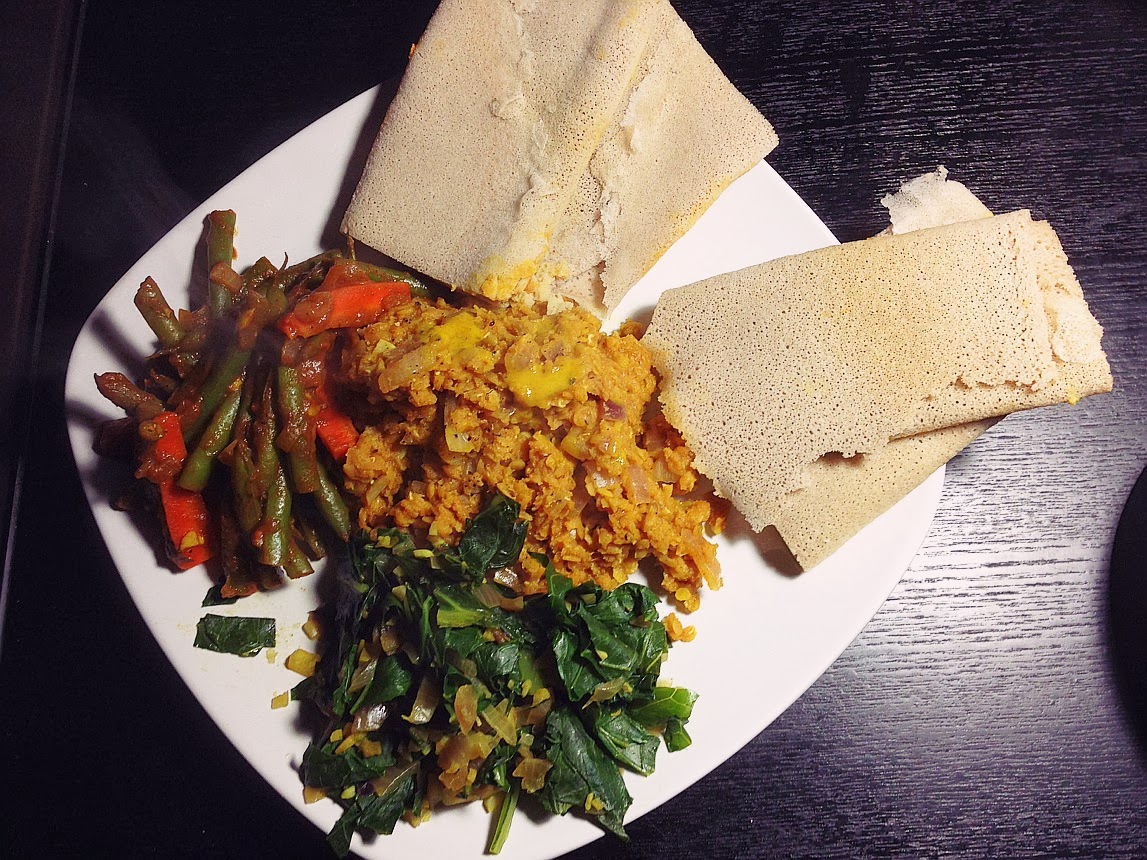
Oil-Free Ethiopian – Plant-Strong Niter Kibbeh and Misir Wett

If I’ve ever contributed something positive and original to the healthy, vegan lifestyle, I truly believe this is it! My friend Abby first turned me on to Ethiopian food almost two years ago. Since then I’ve fallen in love with its unique flavor combinations and the fun that comes along with eating with your hands.


While eating vegan at an Ethiopian restaurant isn’t really a challenge, eating healthy, plant based vegan can be, as essentially all of their food is cooked in a spiced-oil known as niter kibbeh.

When another friend of mine offered to lend me an old Vegan Ethiopian Cooking Zine (remember those?) called Papa Tofu Loves Ethiopian, I decided I would try and create a healthier alternative to niter kibbeh. (Note, Papa Tofu is currently working on a full-scale cookbook, watch out for it, because it is going to be amazing.)


Learning a great deal from reading through the opening of the zine and Papa Tofu’s recipes, I went to work and am now happy to share with you my results which I believe upholds the integrity of the complex flavors associated with this food - without the harmful side effects associated with a high-oil meal.

If you’ve never had Ethiopian, their traditional cuisine is similar to Indian in the sense that it is best to think of each dish as a side, and as such, a complete meal is comprised of several different components. These components are typically served on one large platter and shared between a group of friends or family. True Ethiopian dishes needs to be accompanied by injera – a soft and supple sour pancake-like bread made of teff grain – that is used in place of utensils (Injera over Knives, anyone?) The food is eaten with your hands by ripping small pieces of injera off and then using that to scoop up the various dishes on your platter. That said, this lentil-based dish is delicious on its own as well.

Because Papa Tofu is working on a cookbook, I’m only going to share my recipe for Plant-Strong niter kibbeh and Misir Wett (a delicious red lentil dish sometimes spelled wot or wat) but feel free to search around the internet to find other delicious recipes like Fassolia, Shiro Wett, and my favorite, Gomen. (Whenever I make Ethiopian I typically make 3-5 of these dishes and I buy injera from a local Ethiopian bakery in Harlem, but you can also buy it from any Ethiopian restaurant or try making it yourself).


Ethiopian cuisine is not difficult to make; however, because there are often several components to a single meal, be prepared to use several different pots and pans! You’ll also want to make sure you have a nice large container of vegetable broth before you start and it will be helpful if you either buy or make your own Berbere (Burr-burr-ee) spice blend ahead of time. Most stores sell a relatively mild pre-mixed berbere blend, so if you prefer some heat, make your own. I also find it helpful to dice a few red onions, and mince several cloves of garlic and ginger before starting anything else.

Now let’s make some plant-strong niter kibbeh


Plant-Strong Niter Kibbeh (keeps up to 3 days in the fridge)
1 ½ cups of vegetable broth
¼ of a ripe avocado (this replaces the fat of the oil)
¼ cup chopped red onion
2 tablespoons minced garlic (or more to taste)
1 tablespoon minced ginger
½ teaspoon turmeric
½ teaspoon fenugreek
½ teaspoon ground cardamom
½ teaspoon ground cinnamon
6 whole cloves or ¼ teaspoon ground clove
¼ teaspoon ground flax seed (optional)
Pinch of nutmeg

(This recipe makes just shy of 2 cups – enough for an entire Ethiopian meal comprised of several different recipes – with a little bit left over)

In a high powered blender or food processor, add all of the ingredients and blend until completely smooth. If you are using a Vitamix or similar blender, continue blending the ingredients until steam begins to rise out of the lid. If you are using a lower powered blender, transfer the blended sauce into a small sauce pan and bring to a low simmer and then let cool.


Misir Wett

1 ½ cups dry red lentils
3 cups of vegetable broth or water (to cook lentils in)
1 cup of vegetable broth (for sautéing)
1 medium red onion – finely diced
3-4 cloves of minced garlic
2-3 tablespoons no-salt tomato paste or 1-2 medium tomatoes
3 tablespoons niter kibbeh
1-2 tablespoons of Berbere spice
1 tablespoon sweet paprika
1 teaspoon cumin
1 teaspoon coriander
1teaspoon cinnamon

Start by soaking, washing and cooking your red lentils as you normally would. Then place them into a large pot with 3 cups of vegetable broth and cook as you normally would until the lentils are very soft – roughly 25-30 minutes. Once done, drain off any extra liquid.

Right before the lentils are done cooking, heat a pan and add two to three tablespoons of niter kibbeh. Saute the onions and garlic until the onions become translucent. At this point, add the tomato, berbere, and other spices. Mix well and sauté for another 2-3 minutes. Now add 1 cup of vegetable broth and bring to low simmer. (Note: If you want a smoother gravy, you can blend all of these ingredients) Now add the lentils and another tablespoon of niter kibbeh and a tiny bit of vegetable broth and sauté for a an additional 10 -15 minutes.

Note, once finished cooking you can add lightly blend or food process all of this for more of a dipping sauce. 
Serve over an injera lined platter and top with fresh cracked black pepper. 

As always the information presented in this blog is for educational purposes only. It should not be considered as specific medical, nutritional, lifestyle, or other health-related advice.