For
those of you who are looking for a less-starchy staple food, I’d like to
introduce you to Pseudograins. These foods have become mainstays in my pantry
and I consume them on a daily bases.
So
what are they? Well, for starters pseudograins are commonly mistaken for
starches or grains, but in fact, they are actually seeds. Because of this, they
are all naturally gluten-free and far less starchy than their counterparts,
which for some people can greatly help improve digestibility. Also, unlike some
other grains, all of these foods are alkaline-forming, which helps reduce
inflammation, making them particularly great foods before and after hard
workouts.
As
a general rule, pseudograins are excellent sources of protein (20 to 25 percent
by volume) among other nutrients. Because they are seeds and not grains, it is
always a good idea to soak them in water for a few hours before cooking. A rice
cooker is a perfect and easy way to cook all of these superfoods!
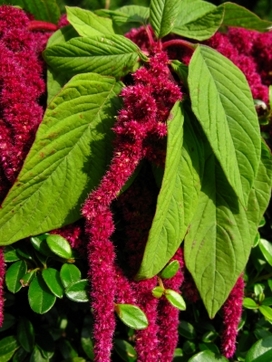
Amaranth: A
broadleaf plant which could easily be mistaken for soybeans early in the
growing season, only a few weeks later there is no mistaking this striking,
tall crop which develops brilliantly colored grain heads producing thousands of
tiny seeds per plant.
Although
amaranth was cultivated on a large scale in ancient Mexico, Guatemala, and
Peru, nowadays it is mostly grown in India, China, Nepal, and other tropical
countries- a perfect example of the globalization of crops that began in the
late 1400s. Due to its weed like nature, amaranth grows easily in most regions
Compared
to other grains and even pseudograins, amaranth is particularly high in
protein. It is also a good source of iron, magnesium and phosphorus, and a very
good source of manganese.
Like
all of the other foods on this list, Amaranth is a seed that is gluten free and
greatly benefits from being soaked for a few hours prior to cooking. Several
studies have shown that like oats, amaranth may be beneficial for those with
hypertension and cardiovascular disease. Regular consumption has been shown to
reduce blood pressure and cholesterol levels, while improving antioxidant
status and some immune parameters.
To
cook amaranth, boil it in 2.5-3 cups
of water or veggie broth for every 1 dry cup of this seed. Cooking time takes
between 25 and 30 minutes but can be cooked faster if soaked ahead of time.
Buckwheat:
Despite its name, Buckwheat is not actually wheat. Rather the name 'buckwheat'
or 'beech wheat' comes from its triangular seeds, which resemble the much
larger seeds of the beech nut from the beech tree and in fact is a seed in the
rhubarb family. An incredibly old food, buckwheat was first cultivated in the
high elevations of the Yunnan region in China. From there it spread to the
Middle East and Europe. It was one of the first crops brought to North America by
the European explorers during the Age of Discovery.
This
grain contains a surprisingly large amount of the amino acid, tryptophan, which
is a precursor to the neurotransmitter, serotonin, a known mood-enhancing
chemical. For a single cup, it packs 22 grams of protein and all of your daily
needs for magnesium, copper, and manganese.
Like all plant foods, it is also a good source of dietary fiber as well
as vitamins E and B.
Because
buckwheat is a slow release carbohydrate, when accompanied with a simple
carbohydrate, buckwheat becomes one of the best endurance fuels available (it
is also highly anti-inflammatory). Like all the pseudograins, it is best to
soak buckwheat in warm water before cooking it. Buckwheat should be soaked for
at least 1 hour to help improve digestibility.
Cook
buckwheat with a 2:1 water to buckwheat ratio (cooking in veggie
broth will increase its flavor.) Cooking time between 15-20
minutes.
Quinoa: I know I’ve posted about
quinoa a bunch in the past, (you can find a recipe for quinoa cookies and quinoa hemp pesto) but quinoa is a serious
food that should be part of everyone’s diet. Nutritionally similar to Amaranth,
Quinoa originated in the Andes and held a sacred
place among the Incas who referred to it as the ‘mother of grains’ and had
special planting and harvesting rituals to ensure a bountiful crop. Despite the
Incan nickname, it is actually more closely related to beets and spinach than
to modern-day wheat.
Quinoa is an endurance-athletes dream
come true! High in iron, B vitamins, and calcium it’s also a great source of
protein. Dishing up 6 grams of protein for each dry 1/4 cup, this is one seed
that should not be dismissed. Not only is it super healthy, but it has a light,
fluffy texture, mild earthy taste and is easy to prepare. To top it off, there are several different "varieties" of quinoa, coming in an array of colors- apparently red quinoa has the highest amount of antioxidants, but is often very expensive. Before cooking, soak
quinoa in warm water for a few hours whenever possible. At least, rinse it
well, as Quinoa contains an outer-inhibitor that otherwise prevents complete
digestion. Soaking and rising removes this and increases nutritional
absorption. A rice cooker works great; however, you can easily prepare Quinoa
without one too.
To boil quinoa, simply put it in a pot
with 2 parts water for every 1 part quinoa, stirring occasionally for 20
minutes or until all of the water is evaporated. Alternatively, you can also bake
it at 350 for about 40 minutes.
Wild
Rice: Wild Rice might be the most exotic of these four
pseudograins. Not rice at all, wild rice is actually a grass that grows in
shallow areas of water similar to true rice. This pseudograin has a long and
storied history, particularly in North America where many tribes harvested the
grains of the grass in canoes by gently brushing the stalks with wooden sticks
called “knockers.”
Sometimes called “good berries” wild
rice grains have a chewy outer shell with a tender inner grain that has a
slightly vegetal taste. Typically sold as a dried whole grain, wild rice is
high in protein, the amino acid lysine and dietary fiber, and low in fat. Like
true rice, it does not contain gluten. It is also a good source of certain
minerals and B vitamins.
Wild rice is roughly 80%
carbohydrate and a whopping 15% protein. Normal brown rice is only 8% protein,
so wild rice is an excellent food to sub for rice in a meal if you are
concerned about your protein intake. Wild rice has half the fat content of
brown rice. But seriously, if you are eating a whole food plant based diet, none
of this is really of concern.
To cook wild rice, first rinse it in
cold water. Then you can steam, boil or microwave it. To steam it, put wild rice in a medium sauce pan, bring 1
cup wild rice, 3 cups water to a boil. Cover, reduce the heat to maintain a
steady simmer, and cook until the rice is tender and the kernels pop open, 45
to 60 minutes. Uncover the rice and fluff it with a fork. You
may need to add more water as needed. Steamed wild rice will be very tender
when finished. To boil wild rice, bring
5-6 cups water for every dry cup of wild rice. Bring the water to a boil. If
desired, add 1 tsp. salt and 1 cup wild rice. Bring everything back to a boil
before reducing the heat to maintain a low boil. Cook until the rice is tender,
about 45 minutes. Microwaving wild
rice is perfectly safe and the fastest of the cooking methods, although
the rice will be slightly chewier. Add 1 cup wild rice and 3 cups water or
broth to a 2-quart glass or other microwaveable container and cover. Microwave
on full power for 5 minutes. Fluff with a fork then microwave again for another
15 minutes. Check half way through. Let cool slightly then taste. If not done,
start using 2 minute intervals.
Now that you have been introduced to these great foods, start looking for them in the stores. These ingredients, while might take a little bit of searching, but can typically be found in any grocery store- be sure to check the international aisles as well as bulk sections. Also start checking back here as I'll be posted some BYOL original recipes featuring each of these super star foods!
cheers
all nutrition data gathered from nutritiondata.self.com