Showing posts with label McDougall. Show all posts

Friday, October 4, 2013

African Sweet Potato Stew

Even though it is 80 degrees in New York, it’s officially fall. While I’m in no rush for the winter weather to arrive, I am excited that root veggies are officially back on the menu! This dish has it all: nutrient dense, easy to make (one pan only), a great taste, and it’s incredibly filling. Making it perfect for any fall evening -even warm ones!

Between the brown rice, the beans, and the sweet potato this dish is heavily starched-based. But don’t worry, contrary to what the Aitken’s type diets claim, neither starches nor carbohydrates make you fat. This is due to the way our bodies process carbohydrates. While many argue that starches are converted into simple sugars and then stored as fat by the body; that is not how it actually works.


First it is important to note, that unlike fats which has 9 calories per gram, carbohydrates contain only 4 calories per gram. This means you will feel physically full with less calories. Basically this means starches have a low calorie density but a high satiety value per calorie.

After eating complex carbohydrates like potatoes or beans, our bodies break these carbs down into simple sugars. These sugars are absorbed into the blood stream, where they are transported to our cells and used for energy. When you consume more carbohydrate than your body needs to furnish it with energy, the body stores around 2 lbs of it, in the form of glycogen, invisibly in the muscles and liver as a reserve.  Any remaining carbohydrates are typically burned off as body heat rather than stored as fat. This is because humans are very inefficient at turning sugars into fat, a process known as de novo lipogenesis. Even simple sugars are rarely turned into fat. For example, a study found that both trim and obese women fed 50 percent more calories than they usually ate in a day, along with an extra 3 ½ ounces of refined sugar, produced  less than 4 grams of fat daily. That means it would take nearly 4 months of this overeating for a person to gain 1 pound of fat. In comparison, the average passenger on a cruise ship, dinning on high fat and protein animal foods, gain an average of 8 lbs on a 7-day trip.

Fun facts about Sweet Potatoes:
  •  Sweet potato and potatoes are two of the only foods that can fulfill all of our nutrient needs meaning they have all the protein, fats, and carbohydrates our bodies need to thrive (with the exception of some micronutrients).
  • George Washington grew sweet potatoes on his farm at Mount Vernon.
  •  George Washington Carver developed over 118 products from sweet potatoes including a glue and starch for laundry.
  • They are loaded with vitamins A, C and E as well as other antioxidants that can help prevent heart disease and cancer, bolster the immune system, and even slow aging by promoting good vision and healthy skin.  They have been recently reclassified as an "antidiabetic" food and they are anti-inflammatory.


African Sweet Potato Stew:
Serves 3-4

4-5 medium sized sweet potatoes
2 carrots diced
1½  cups brown rice
1½  cups of corn
1 red onion-chopped
1 can garbanzo beans
1 can pinto beans
1 large can chopped tomatoes
½ cup almond, peanut, or sunflower butter (I used almond)
¾ bunch of collard greens, de-stemmed and chopped
4 cups veggie broth
1 tablespoon ground ginger
1 tablespoon ground garlic
1 teaspoon ground cumin
1 teaspoon ground coriander

In a large pot, sauté the chopped red onion in 2 tablespoons of water until the onions are translucent.

Add the sweet potatoes, veggie broth and spices and cover for 10 minutes to get the veggie broth hot. As the broth begins to boil, add the remaining ingredients with the exception of the almond/peanut/sunflower butter, the corn, and the collard greens.

Cook for 15 minutes at a simmer. As the sweet potatoes start to soften, add the remaining ingredients and cook for an additional 10 minutes until the greens are soft.

Further reading:
McDevitt, R.M. et all., “De novo lipogenesis during controlled over-feeding with sucrose or glucose in lean and obese women.” American Journal of Clinical Nutrition. 2001.

McDougall, John A. and Mary McDougall, The Starch Solution: Eat the Foods You Loce, Regain Your Health, and Lose the Weight for Good. New York: Rodal, 2012.

As always the information presented in this blog is for educational purposes only. It should not be considered as specific medical, nutritional, lifestyle, or other health-related advice.

Saturday, July 13, 2013

Blood Test Results: Blood pressure, Cholesterol, and HDL

Yesterday I went to the Doctor’s for the results of the blood work I had drawn last week. After first telling me I had Chlamydia, the Doctor pulled up the correct chart (Thankfully, I don’t have Chlamydia, unfortunately there is an Anthony in Harlem who does.) the Doc began going over my numbers.

After being vegan for 6 years, my B-12 levels were perfect. The healthy range is between 200-900 pg/mL. I scored a 695. I did this by consuming a few fortified foods once in a while such as soy and almond milk but I also take a B-12 supplement every few days. It is the only supplement I take and I don’t take it every day.

In America, heart disease is currently our number one killer, but as Dr. Esselstyne boldly states in the documentary, Forks Over Knives, “if the truth be known coronary artery disease is a toothless paper tiger that need never, ever exist and if it does exist, it need never, ever progress.” Now if you’ve read Dr. Esselstyne’s book How to Prevent and Reverse Heart Disease (BYOL review pending), or Rip’s Engine 2 Diet, you’ll remember that there are a few magic numbers when it comes to blood pressure and cholesterol that nearly guarantee you’ll stand apart of the majority of Americans who currently suffer from the disease (many of whom won’t know they even have the disease until after they have died of a serious heart attack!).


First, blood pressure. Unfortunately, according to the CDC, one in three Americans have high blood pressure, many of whom are told to take medicine for the rest of their lives to artificially lower it. We consider high blood pressure, or hypertension, to be a natural part of the aging process, but this is not true. Rather it is a natural part of the Standard American Diet. Adults who consume a mostly plant-based diet typically have blood pressure levels similar to their children. I’m happy to use my Mom as a shinning example of this. She has had high blood pressure my entire life and for the last several years was on medication to control it. Last August I convinced her to switch to a plant-based vegan diet. Since the beginning of April, she has been completely off her medications!

Blood pressure is expressed in two numbers. The first number is called the systolic blood pressure and this represents the force your heart exerts on your arteries when your heart squeezes. You want your systolic pressure to be 120 or below. Mine was 106.

Next is the diastolic blood pressure, and this represents the force the blood exerts on your arteries when your heart relaxes. This number should be below 80. Mine was 60.

Cholesterol is, perhaps, America’s real greatest killer! And to think most people willing put extra cholesterol into their bodies whenever they chose to eat an animal based food! The average American’s cholesterol, again according to the CDC is around 200 mg/dL. This, by their standards is borderline risky, however the research shows that even this number is too high. Heck, just common sense can tell you that! Currently ¼ of the population will die from heart disease… something is clearly off with our numbers. Rather, Dr. Esselstyne argues from his research that to be “heart attack proof,” our total cholesterol levels should be below 150. Among others, Dr. Campbell’s The China Study concurs with this number. Mine was 88 mg/dL.


Now besides the total number, cholesterol is also made up of a few numbers. The two most commonly discussed are LDL, or low-density lipoprotein, and HDL, or high-density lipoprotein. We traditionally refer to LDL as bad, and HDL as good because LDL sticks to our arties, while HDL tends to clear them. 

If LDL is bad, we obviously want our LDL reading to be low. Most people’s LDL is around 100, but according to Dr. Esselstyne that number is still too high, and can put one at risk of heart disease, and several other chronic degenerative diseases. Instead, he recommends we should aim for 80 or below. Mine was 34.

Now HDL is a bit more tricky. Because it is the “good” cholesterol, we assume we want that number to be high; however, according to several research studies, what is far more important is to have your total cholesterol and LDL levels in check.

My HDL level was 27 mg/dL. My Doctor told me that it was way too low and it could potentially put me at risk for heart disease; however, I believe - and the science supports me - that there is an error in his thinking. Yes, 27 mg/dL is very low, however, my total cholesterol is over 100 points below average. So obviously my other levels will also be low. According to Dr. John McDougall, “When total cholesterol is lowered, all fractions of cholesterol are reduced, including HDL-cholesterol. This is not bad, but expected, and actually of no harm.”

In a study done on the Indian population, Tarahumara, a population that thrives off of a nearly complete plant-based diet and has almost zero accounts of heart disease help prove this. The researchers subbed the Tarahumara plant-based diet with an “affluent” diet high in fat, animal protein, and cholesterol, the natives total cholesterol raised 31% from an average of 121 to 159 in just five weeks. At the start of the study their HDL levels were around 32 mg/dL. Over the five weeks, those levels, on average, also jumped by 31% to 42. The study concluded they were at significantly higher risks for contracting heart disease at the end of the study then they were at the beginning even though their “good” cholesterol level rose. Essentially, labeling one form of cholesterol as “good” and one as “bad” is a classic example of the reductionist thinking that is too common when it comes to health and nutrition. A certain amount of both forms of cholesterol are needed for the body to function properly- and our bodies make both so there is no reason to increase our consumption of it with animal foods.

Worldwide (comparing people who eat different diets) those who have the lowest HDL levels (like people in rural Japan, China, and Africa) have the lowest rate of heart disease – and also the lowest total cholesterol. Those with the highest HDL levels (like people in the USA and Western Europe) have the highest rates of heart disease. 

As Dr. McDougall notes, when total cholesterol drops so too will HDL. In fact, in a study of over 500 of his patients, he found that, on average, people reduce their overall HDL levels by 19 percent (8 mg/dl – from 41 mg/dl to 33 mg/dl) in 11 days.

The Doctor told me that I should try and raise my HDL by consuming more Omega-3 fatty acids. At first he suggested fish, but then remembering that I was vegan he then offered I consume nuts and some seeds. He never specifically said walnuts, chia or flax, but those were the foods he was groping for. (As a side note, studies on cows and fish have both shown these animals get their Omega-3s from eating greens- It is not implausible to suggests humans do the same.)

Now, you might think, well, that doesn’t seem unreasonable, and until just a few days ago, I might have agreed. But we have to remember there are two essentially fatty acids that our bodies need to get through food. The first is Alpha-linolenic acid or Omega-3, which the doctor said would help raise my HDL- the second is Linoleic acid or Omega-6. According to recent studies, the ideal ratio between these two EFAs is a 1:1. A whole food, plant-based diet typically provides exactly that, a 1:1 to 3:1 (still within the safe realm) Omega 6 to Omega-3 ratio (for comparison, SAD is a 20:1 – 50:1 ratio). For someone eating the Standard American Diet, increasing their consumption of Omega-3 foods is a good idea, however for someone eating a plant-based diet it may not be. By increasing the Omega-3 intake, you could disrupt the ratio between Omega-6 to Omega-3, and this can lead to increase risk of heart disease as well as type-2 diabetes among other aliments. Both of these outcomes would be very rare with the numbers that I am dealing with, but why take the chance?


Finally, one cannot die of low HDL just as you cannot die from having a high HDL number. That said, far more people go to their graves from heart attacks believing their high cholesterol is safe because they have a lot of “good” cholesterol. We need to stop thinking about these matters in such reductionist ways. 

I hope you all have a great weekend filled with healthy foods!


As always, I am not a medically trained Doctor and this blog should not be taken as medical advice. Consult your doctor about any changes you make to your diet and all of your health concerns.

References:
Brinton EA.  “A low-fat diet decreases high density lipoprotein (HDL) cholesterol levels by decreasing HDL apolipoprotein transport rates.”  Journal of Clinical Investigation. 1990 Jan;85(1):144-51.

Kausik, et al. “Long- Chain Omega-3 Fats, Fish and Type 2 Diabetes,” American Journal of Clinical Nutrition 90, 613, 2009.

Esselstyn, C. Prevent and Reverse Heart Disease: The Revolutionary, Scientifically Proven, Nutrition-Based Cure, New York, Penguin Group, 2007.

Esselstyn, R. The Engine 2 Diet: The Texas Firefighter's 28-Day Saver-Your-Life Plan that Lowers Cholesterol and Burns Away the Pounds, New York, Wellness Central, 2009. 

Knuiman JT.  HDL cholesterol in men from thirteen countries.  Lancet. 1981 Aug 15;2(8242):367-8.

McDougall J.  “Rapid reduction of serum cholesterol and blood pressure by a twelve-day, very low fat, strictly vegetarian diet.”  Journal American College Nutrition. 1995 Oct;14(5):491-6.

McDougall J. “Good Cholesterol “Worstens” with McDougall?” McDougall News Letter September 2003.

McMurry MP.  “Changes in lipid and lipoprotein levels and body weight in Tarahumara Indians after consumption of an affluent diet.”  New England Journal of Medicine. 1991 Dec 12; 325 (24):1704-8.


Wednesday, October 31, 2012

T. Colin Campbell’s The China Study Reviewed


Campbell, T. Colin, The China Study; Startling Implications for Diet, Weight Loss and Long-term Health. Dallas, Texas: BenBella Books, 2006.


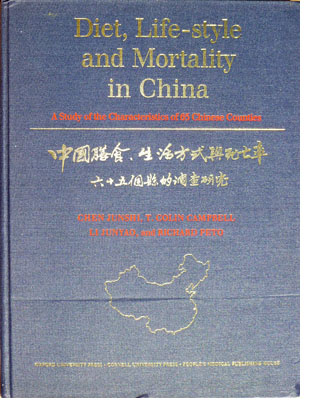
I recently finished reading the China Study: Startling Implications for Diet, Weight Loss and Long-term Health by Dr. T. Colin Campbell and his son Dr. Tom Campbell. I have been intrigued with the book for quite some time, however for some reason the 400 page monograph seemed daunting. While still 400 pages, the book is a distilled and truncated version of Dr. Campbell’s and Dr. Chen Junshi’s Diet, Life-style and Mortality in China which clocks in at a massive 894 pages. The New York Times called this study the “Grand Prix of epidemiology" and the "most comprehensive large study ever undertaken of the relationship between diet and the risk of developing disease."

This book is a powerhouse of fair, balanced, and evidenced-based nutritional information, which makes the book standout when it is placed among “diet” books on shelves in bookstores. Containing nearly thirty pages of references and three appendixes with more detailed information, the book is clearly the result of a lifetime (over forty years in Campbell’s case) of research in nutrition.


Background:

T. Colin Campbell’s story is interesting on its own and he includes a large part of his story in the final section of the book. He grew up on a rural dairy farm. Perhaps ironically, his father died quite young of heart disease. As the first in his family to attend college, Campbell studied pre-veterinary medicine at Pennsylvania State University. He obtained his B.S. in 1956 and then attended veterinary school at the University of Georgia for a year. During that time he became increasingly interested in the diets of humans, changed tracts, transferred to Cornell,  and finished his Ph.D. under Clive McCay (a famous researcher of diet and aging) in 1961. He then went to teach and research at MIT and later Virginia Tech, but ultimately spent the majority of his career in the nutrition sciences department of his alma mater, Cornell.

His early research focused on malnutrition and protein, which brought him to Indonesia, to study diet and lifestyle. While there he began to notice, that contrary to his then working hypothesis, the more animal foods one ate, the more likely the person would suffer from cancer. Up to this point, Campbell firmly believed malnutrition was the result of a lack of animal protein from a persons diet. However he soon began to question this hypothesis and the result dramatically altered his career. Finally, while he was in Indonesia, Campbell read a small and obscure paper published on cancer and animal protein in mice and rats, which observed that cancer grew more rapidly when a diet contained higher levels of casein (the main protein found in cheese and dairy products). Even more important, a diet low in animal protein could stop and even reverse the growth of cancer cells.

Campbell returned to the States and recreated the experiment he read about. It amazed him. He then spent the next thirty-five years furthering the field along this path while winning some of the most prestigious awards for research along the way. However, his most remarkable work remains the China Study.


The Study

In the early 1970s, the premier of China was diagnosed with terminal cancer. As a result, he ordered a nationwide survey to collect information on the disease and its impact on the Chinese population. Between 1973-75, the surveys were collected. It was a monumental study of death rates for twelve different kinds of cancer for more than 2,400 Chinese counties and 880 million (96%) of their citizens. The end result was an atlas showing where certain types of cancer were high and where they were almost nonexistent. The atlas made it clear that in China, cancer was geographically localized. “Some cancers were much more common in some places than in others.” This was significant because the variations existed within a country where 87% of the population was of the same ethnic group, essentially taking genes out of the equation of cancer risk. Because there was such a massive variation in cancer rates among different counties where genetic backgrounds were similar from place to place, it seemed possible that cancer could be connected to environmental and lifestyle factors rather than genetics (it is estimated that genetics determines only around 2-3% of the total cancer risk- “Genes do not act in isolation; they need a trigger for their effects to be produced”).

China proved the perfect place to study cancer and lifestyle because “critical to the importance of the China Study was the nature of the diet consumed in rural China.” It was a rare opportunity to study health-related effects of a mostly plant-based diet.

This sparked Dr. Campbell’s interest and in 1983 an international team of biochemists and scientists were working closely to find correlations between the cancer atlas and a new, large collection of dietary surveys and blood work. Between 1983-4, they collected data on 367 variables from 6,500 people living in 65 different counties, and then compared each variable with every other variable. The results were astonishing. They collected over 8,000 statistically significant associations between lifestyle, diet and disease variables. Not surprisingly, the more animal protein that was consumed, the greater the risk for contracting a number of different diseases, including several different types of cancer, heart disease and diabetes. They also compared Chinese populations to American populations of similar activity levels and found that on average the Chinese consumed 30% more calories based off body weight than Americans and yet found their body weight was on average 20% lower.

While Dr. Campbell is very forthright about the fact that “absolute” proof of causation is almost impossible in scientific studies, his book leaves little doubt about the correlation between diet and disease. The study emphasized a whole-food plant based diet while also eliminating all meats, poultry, fish, eggs and dairy products (Dr. Campbell identifies dairy as one of the most potent carcinogens that humans are exposed to). They claim that eating a healthy vegan diet will help one escape, reduce or even reverse the development of chronic disease.

The Actual Book

 In this work, Dr. Campbell has set an ambitious goal: “I propose to do nothing less than redefine what we think of as good nutrition.” The book is divided into four sections, but for simplicity it can really be divided into three parts.

The first section reviews some of the ground I’ve already covered. Dr. Campbell’s transition towards and advocacy for a plant based diet, his early work on mice, casein, and tumor growth and the China study. Just from this section alone, Campbell builds a compelling case linking the consumption of animal protein, cholesterol, and processed foods to increased cancer risks. However, in section two Campbell goes into a detailed review of the peer-reviewed secondary literature dating back to the late 1800s, which demonstrates how animal protein is linked to nearly every other major western disease (also know as diseases of affluence).

In this section, Dr. Campbell and his son have done extremely diligent work. Each chapter relates to a different major disease and how diet and nutrition can affect that disease. These chapters include heart disease with an extended discussion of the work from Dr. Esselstyn and Dr. John McDougall, obesity, diabetes as well as more surprising chapters on autoimmune diseases, bone health, and kidney, eye and brain diseases.

In each chapter, Campbell discusses the newest research on the causes of these diseases. By this point in the book, it is no surprise that animal products are intimately linked to each one. For instance, it now seems the autoimmune disease known as Type 1 diabetes, previously thought to be a genetic issue, could actually be triggered by exposing newborns to dairy milk (perhaps in infant formula) too early in their lives. In fact a study done in Chile found that children weaned too early onto cow’s milk-based formula had a 13.1 times greater risk of contracting the disease. This is because most newborns are unable to fully digest the small amino acid chains or fragments of the original protein found in milk and remain in the intestines and absorbed into the blood. The immune system recognizes these fragments as foreign invaders and goes about destroying them. Unfortunately, some of these fragments look exactly the same as the cells of the pancreas which makes insulin. As a result, the immune system will also start attacking the cells of the pancreas and the body will no long be able to produce insulin. The result is a devastating disease that the child will have to deal with for the remainder of its life.

The final section focuses on why this information isn’t more common spread. The answer is surprising obvious. Imagine for a second a newspaper headline about Cows milk causing Type 1 diabetes? It would have a dramatic financial implication for American agriculture. Obviously the entire food system would be greatly impacted. As a result there a barriers built into the system to help protect against that from happening. But is it a conspiracy? According to Dr. Campbell, no it is not. Rather, he claims it is simply the powerful work of a few people favoring the status quo over  sound science.

Unfortunately, part of the status quo means that the majority of nutritional information is filtered through three different levels. First are the scientists, many of whom have close ties to the food and drug industries as their departmental positions are funded in part by various corporations, the result, according to Campbell, are nutritionists become less interested in challenging a system which literally supports them. These scientists are also the most likely to be placed onto governmental committees as "experts" who are responsible for creating acceptable nutritional standards. 

Second is government. Perhaps the saddest of the trio, the government has consistently put economic issues and corporate interests in front of protecting their citizens’ health. This is evidenced every time a major governing body fills committees with lobbyists rather than scientists or when lobbyists are successful in their attempt to bury an honest report. Just think back to the most recent farm bill debate where tomato sauce ontop of pizza was defined as a vegetable and pink slime was found to be nutritionally acceptable. 


Finally, Campbell points his wagging finger at the corporations who fund most of the nations nutritional research. These corporations are broad in their range as well as their influence. Obviously, the meat, dairy and egg industries are powerful, but Campbell also reminds his readers that the orange industry has been startlingly successful at identifying their product with Vitamin C. Not only that, but drug companies sponsor most medical schools in the nation. 

One does not need to have an overactive imagination to imagine what this trio has caused to those who eat the Standard American Diet. Campbell claims this is one of the largest threats to America's future security as a nation, as healthcare spending dwarfs even the swollen military budgets yet the population becomes increasingly less healthy. Campbell’s theory is more than plausible as he details his own personal struggles from within the scientific community. Indeed it is often hard to believe his career was not squashed by these powers while he was still in Indonesia.

The book details the struggles that Dr. Caldwell Esselstyn and Dr. John McDougall  faced as well. Dr. McDougall was threatened with expulsion from his residency when he counseled a heart patient with advice about nutrition.  Dr. Esselstyn, a top surgen at the Cleveland Clinic, was ostracized by his peers and his plea to help Cleveland’s medical school develop a plant-based healing center have consistently been ignored. Still both have remain steadfast and have been able to help thousands of people heal themselves of heart disease and diabetes through diet.


It seems possible that some of Campbell’s claims are the result of overreaching from the actual evidence; after all, correlations are not causation. But its more likely that Campbell’s work is really that definitive. Campbell prides himself on the fact that he is nothing if not a careful and cautious scientist and while his book is written for a general audience, in the three appendixes Campbell goes into further detail about his protein studies in rats, his China Study, supplementations and Vitamin D – all of which were highly provocative as well as useful. When one considers the large amount of supporting secondary research Dr. Campbell relies on, it becomes nearly impossible to ignore his findings.

While the book has had it’s fair share of critics (many of which have been responded to personally by Campbell), it has met the praise of some of the most serious researchers in the field including Dr. Wilfred Niels Arnold from the University of Kansas and Professor Hal Harris of the University of Missouri–St. Louis who actually converted with his graduate students to a whole food, plant-based diet after reading the book. CNN’s Sunjay Gupta claims the book had a similar impact on him in his documentary called The Last Heart Attack. Campbell’s admirers also include President Bill Clinton, Oprah, Dr. Oz and thousands of others around the world. It seems to me that few others have had the impact on human health that Dr. Campbell has had (or, ironically, for animal rights, something Dr. Campbell does not vocally support). There are few books which can literally save your life, this is one of them and it should not be ignored. 


Sunday, February 12, 2012

ch-Ch-CH-CHIA!


I’m sure that you’ve all heard about the newest craze related to nutrition. Foodies have been raving about Chia seeds for quite some time now. I even know a runner who travels around with a little tube of chia in her bag for moments when she feels like she needs a little pick-me-up. But why? What is the big fuss over such a little seed?


Christopher McDougall, author of Born to Run, compared a tablespoon of chia to a “smoothie made from salmon, spinach, and human growth hormone.” I only eat one of those three so it’s a good thing that chia is around.

The chia seed, while a new rave in the US, played an important nutritional role in the diets of Aztec and Mayan warriors. Often called the “running food” it was used for long distance travel and for nourishment before and after battle.

Today we now know that chia seeds are a complete protein, the highest vegetable source of omega 3 fatty acids, and filled with calcium and magnesium as well as dietary fiber! Truly, a wondrous food.

But how should we use these little guys? Unlike sesame or flax seeds, chia seeds have a digestible outer shell, which means they don’t need to be blended before eaten. As such, they can be sprinkled on top of salads, tossed in marinara sauce or thrown over a bowl of lentils. So powerful are these little guys that one heaping tablespoon a day meets nearly the entire daily need of Omega 3s! That said, I present here a great and simple little desert or a powerful breakfast. Simply put, here is Blueberry Chia Seed Pudding. 


3/4 cup chia seeds
2 cups unsweetened almond milk
Tiny dash salt
1 large banana- ripe
1 cup blueberries

To begin, put the almond milk (or any non-dairy milk in the blender (next weeks post will discuss why this dish should never be made with dairy milk)) with the banana and ¾ cup of the blueberries. Blend until smooth and dark blue.

While that is being blended, add the chia seeds to a large mixing bowl or container. Once milk is done being blended, simply pour it on top of the seeds.


 Now all you need to do is stir once every 5 minutes for the next twenty minutes or so. Similar to flax seeds, the chia will absorb the liquid and obtain a gelatinous texture. The mixture should be done after about twenty minutes of soaking and mixing. The mixture should be now be thick and ready to eat. I prefer it refrigerated and often add the other ¼ cup of fresh blueberries to the top.


Bon Appetite


The best part is, if you don’t like the pudding, you can also use your left over seeds for an elegant plant!


sneak peak: next weeks post is going to be four studies done over the past few years that have shown that the human body's ability to absorb antioxidants becomes compromised when ingested with dairy!