Showing posts with label nutrition. Show all posts

Saturday, March 15, 2014

Mung Beans and Sprouting Guide

Sprouting is an ancient technique that has been used on all sorts of beans, legumes, and various seeds as a way to increase their nutrition profile, digestibility, and flavor. Over the winter I’ve become addicted to sprouted mung beans (sometimes called ming beans) but this process can be repeated with any other legumes including lentils and chickpeas (which are other favorites).

While you can buy sprouts from most grocers today, they are far cheaper when you sprout them yourself. Besides being relatively cheap, especially when compared to the huge amount of nutrients sprouted legumes offer, they can also be a nice way to add fresh, raw produce to your diet year around.  Adding sprouts is an easy way to make any meal look a little more exotic and fancy.  


One study published a few years ago examined food consumption in five different regions of the world and found that legumes intake was the most important factor associated with longer lifespan. The study found an 8% reduction in risk of overall mortality for every 20 grams of legumes consumed. 

As legumes, mung bean sprouts are an incredible source of nutrients. Besides being anti-inflammatory, they offer an excellent amino acid profile and are 20% calories from protein which is remarkably high (sigh, and yes, they are a complete protein, just like all whole foods!) They also are high in vitamin C and vitamin K, which is essential for the process of blood clotting. Vitamin K also helps regulates bone mineralization and helps maintain bone density. Mung beans are an excellent source of riboflavin, folate, iron, and manganese. They are also packed with Omega 3 and Omega 6 fatty acids as well as other micronutrients.


Besides being an all-around nutritional all-star, mung beans are incredibly easy to sprout taking an average of only 3 days before becoming edible. Once sprouted, mung beans have a tasty, fresh nutty flavor and offer a delicate crunch when added to a dish.

Once sprouted, you can keep mung beans in a sealed jar in the refrigerator for up to 5 weeks, although once you taste them, I'd be surprised if they last more than a few days!    


How to sprout legumes:

1. Take the desired amount (yield is approximately 2:1 so 1 cup of dry mung beans will be roughly 2 cups sprouted) and rinse them until the water runs clean.

     2. Then place the beans in either a bowl or jar and fill with cold filtered water. Add about 2-3 times the amount of water as there are beans. IE: 1 cup beans needs 2-3 cups water

     3.   Let soak overnight (8 – 12 hours)

     4. After soaking the beans, drain them and rinse them again with cold water.

    5. Place the beans in either an empty bowl or jar and set to the side. Store them in room temperature that isn’t directly hit by sunlight, but that does get some light.

   6. The next morning (day 2) the beans should be starting to open. Rinse once more in cold water and then return to the jar or bowl.
   
   7. By day three you should see little tails coming out of the body of the bean. You can either enjoy them this way, or let those little tails grow for another day for a softer sprout. Both are delicious. Rinse one final time, and then enjoy by adding to both raw and cooked meals.


   They’re great on salads, pastas, tossed in soups or pretty much any other dish! I just tossed some on top of my Green Mac N' Cheese. 

Darmadi-Blackberry, M. Wahlqvist et al. "Legumes: The Most Important Dietary Predictor of Survival in older people of Different Ethnicities," Asia Pacific Journal of Clinical Nutrition. 2004, 217-20.

As always the information presented in this blog is for educational purposes only. It should not be considered as specific medical, nutritional, lifestyle, or other health-related advice.

Saturday, February 15, 2014

Sharping the Saw by Joel Kahn, M.D. Preventative Cardiologist

Today I have a really special post to share with you all. Joel Kahn, M.D. has written a special guest post for BYOL today on how and where a preventative cardiologist gets their information about health and nutrition. The advice he shares below is sound and can be a great resource to anyone regardless of their interest in nutrition. Dr. Kahn and I have been connected online for the past year, and being nearly done with his book, which I can’t recommend enough, I am greatly looking forward to meeting Dr. Kahn in person at the New York City Veg Fest.

Dr. Kahn is one of the nation’s most renowned interpreventional cardiologists. Having practiced invasive, interventional, and preventative cardiology since 1990, Dr. Kahn has years of clinical and research experience. He is a regular contributor for MindBodyGreen, Readers Digest magazine, and the recent author of The Holistic Heart Book.   


Sharpening the saw: How a teacher gets training:

I am excited to write a guest piece for BYOL and am looking forward to speaking at the NYC Vegetarian Food Festival March 1.  I am a cardiologist trained at the University of Michigan long ago (graduated summa cum laude due in part to my vegetarian diet!) and practicing in Detroit all these years. I do heart catheterizations, place stents, run to emergency rooms, see office patients, and answer a zillion calls and emails a day.

Long ago I chose a vegetarian lifestyle and then the big V over a decade ago. No burger, no cheese, no fish etc.  I have been on billboards across Detroit in my doctor coat announcing “Beat heart disease, diabetes and cancer, Go Vegan” and speak regularly on TV, radio and lectures on the health, environmental and ethical reasons that plant based lifestyles are the best and only choice for the future.

Increasingly I am looked upon to have the answers to tough question, tricky critics, anti-vegan blogsites, Paleo promoters and so on. So how does the teacher stay ahead of the rest and have as many answers as possible?  As Stephen Covey wrote in the Seven Habits of Highly Effective People, how do I sharpen my own saw to be able to cut more effectively?  Can these help you stay on top of trends in nutrition, animal rights and related topics?

One resource I used that may appeal to some readers was to formally go back to school. I chose a program in integrative cardiology offered at www.a4m.org in conjunction with the University of South Florida School of Medicine.  These year long curriculum of both online and classroom lectures is open to both physicians and others interested in an advanced training in many areas of health and wellness and offers the advantage of a university affiliation if so selected. Other resources for formal education can be found at www.functionalmedicine.org, www.abihm.org, and www.acam.org.   For those interested predominantly in nutrition, online programs offered at www.integrativenutrition.com, www.ecornell.com, and www.aryuvedicnutrition.com are available.

Not everyone has the time or interest to pursue these formal courses and still there are options, including ones I use, to stay current and engaged in the fast paced world of nutrition and health.  First on the list is to sign up for the daily emails from Dr. Michael Greger at www.nutritionfacts.org.   Dr. Greger is in Washington, D.C. and has been producing short and high quality videos on YouTube for several years.  There is no charge to receive his daily email and the number of videos exceeds 1,000.  Dr. Greger does very thorough research of the medical literature and all his videos are backed by multiple references drawn from the medical literature. He reviews about 14,000 articles on nutrition yearly and finds hidden gems. He presents the topics in vivid and clear formats and adds his special humor and slight sarcasm to provide a constant stream of enjoyable material. I watch his videos daily and often search his site for information. He produces one video a year that is an overview of a topic that lasts an hour and it has always been a highlight that I share liberally on social media. Sign up now if you have not.


Another site that will challenge and educate you is www.plantpositive.com. This site is shrouded in more mystery as the author is anonymous. I have emailed with him and he is a graduate student who chooses to keep his identity hidden.  He produces You Tubes which are free and last form about 8 to 30 minutes.  There are easily over 150 such videos so there are literally hours and hours of information.  Like Dr. Greger, this site relies heavily on medical references and not just opinion.  Plant Positive has taken the task of responding to Paleolithic blogger and authors, cholesterol confusionists, and all lovers of animal saturated fats.  There is a group of these people that are polished, practiced and vicious in their defense of eating animals for health. I listen and relisten regularly to these videos.  They provide a detailed analysis of the writings of Loren Cordain, Gary Taubes and others and identify false statements, distorted references, and logic fallacies on a regular basis.  This faction is not to be taken lightly and several physicians with best selling books promoting diets that are variations of Atkin’s ketogenic and pro-atherogenic venues are constantly confusing the public about the health risks of animal products.  I encourage you to jump into this site but be prepared for some of the topics to be very detailed and challenging.

My good friend Dr. Neal Barnard founded www.pcrm.org about 25 years ago. Trained as a psychiatrist, Dr. Barnard shifted to animal rights and plant based nutrition and set up this organization which does research, advocates for ethical treatment of animals, sues institutions fraudulently promoting unhealthy programs, and writes regular blogs that are shared on social media.  I learn so much from Dr. Barnard and am sure you will too.

A friend I have not yet met but hope to is Dr. John McDougall at www.drmcdougall.com.  Dr. McDougall worked in Hawaii decades ago and observed how the health of native Japanese started to deteriorate when they moved to Hawaii and starting to consume Western foods.  He established a clinic that promoted plant based diets rich in complex carbohydrates and whole grains and has treated tens of thousand of patients or more with these diets.  He regularly writes blogs, publishes book, and produces teaching videos and I have found these very helpful.

Another resource I bring to you is www.mindbodygreen.com. This site established in 2011 has grown at a meteoric speed and now 15 million or more visits occur monthly.  I began writing a weekly column for them a year ago and have contributed over 50 blogs on health and nutrition.  The authors are diverse and occasional blogs promoted non-vegan diets.  I respond to these vigorously for the often erroneous data they present.  Yoga, recipes, and life coaching are frequent other categories. 


And finally, www.bringyourownlentils.com.  This site is simply fun, diverse and of high quality. I am proud to be contributing and look forward to meeting you on March 1. Come say hello.  I will be talking about 10 Holistic Heart Tips and my new book The Holistic Heart Book www.holisticheart.com will be available.  

You can learn more at my website www.drjoelkahn.com or on Twitter at @drjkahn.  Ciao!

As always the information presented in this blog is for educational purposes only. It should not be considered as specific medical, nutritional, lifestyle, or other health-related advice.

Wednesday, January 1, 2014

Welcoming 2014 with Open Arms, Eyes, and Hearts.


While I’m not one to set New Year’s Resolutions, I do like to plan for some short term goals as well as set the intention for the upcoming year. I also like to reflect and think back on the previous year. While I typically keep my yearly intentions and goals to myself  – and they are often just race goals – this year I've decided I’m going public with my 2014 year plans to as many people as possible. I’m hoping this will help hold me more responsible to them.

2013 was a year with a ton of ups and downs – like every year. And to expect 2014 to be much different seems naive. However, I am very excited to announce that I am planning on starting the course work necessary to complete a post-bacc so that I can begin moving forward with my long-term goal of becoming a Registered Dietitian.

Since beginning this blog, many people - friends and strangers alike - have written to me asking for help with their diets. I can sincerely say that it is one of the most gratifying experiences of my life.

Since I was trained as a historian, before I can start a master’s program in nutrition science, I first have to go back to the undergraduate level to fulfill some basic science and anatomy requirements that I have not done. I suspect that many of these courses will be difficult for me, but I also believe that I have the dedication, work ethic, and passion to help me get through the process. I also know that I can count on my incredible support network of friends and family. I consider myself very fortunate that my boss just agreed to support my request for class reimbursement, so hopefully most of my class work will be paid for by my job. 


As always, I am also recommitting myself to another year as a compassionate and healthy vegan. I encourage you all to join me, and try eating a healthy, plant-based vegan diet for the month of January. With the holidays over, now is a great time to commit yourself to healthy eating. Get a free 21-day vegan meal plan from Physicians Committee for Responsible Medicine.


I’m also hoping to launch a redesigned and enhanced BYOL site sometime this year. I’ve already started talking with a web designer, but now I just need to commit. I’ll be honest, this is a lower priority for me right now, but I’m hopeful that by 2015 BYOL will finally look like a respectable site!

I also want to announce that I have an upcoming surgery - it's just 9 days away. After several repeated injuries in my lower right leg over the past 3 years, my sports doctor finally linked the muscle damage to a bone growth in the back of my knee. I will be having the bone growth removed on January 9th in the hopes that after I heal, I will be able to avoid these injuries. I already have two Half Ironman events scheduled -Eagleman in Maryland, and the inaugural Princeton 70.3 - so hopefully I will recovery quickly and will be able to get back to my current fitness level relatively quickly.   

I hope you all had an enjoyable New Year and that the closing of 2013 was a pleasant one. And as always, I want to thank all of you for continuing to follow my musings about the power of plants, proper nutrition, and sport. I promise you all that BYOL will continue to offer the latest research on nutrition, as well as many new and delicious plant-based, low fat, high carb recipes. (Yesterday I learned of a new report from the World Health Organization was released stating that meat is more dangerous than cigarette smoking! Exciting times, indeed!) 


Wishing all of you a happy 2014! 


As always the information presented in this blog is for educational purposes only. It should not be considered as specific medical, nutritional, lifestyle, or other health-related advice.


Wednesday, November 6, 2013

Preserving Immune Function

We all know that exercise has benefits. One of the many benefits is improved immunity and decreased illness rates. This is hardly breaking medical news but even small amounts of exercise can make a big difference! One study found that just 6 minutes of kids running around was enough to boost their white blood cells circulating around their blood stream by more than a third and another study found that athletes tend to need 15-50% fewer sick days!


Regular exercise has great advantages for the elderly as well. Sedentary women in their 70s have as high as a 50% chance of contracting an upper respiratory illness every year. However that risk gets knocked down to just 20% when they do just 30 minutes of walking a day and when they did even more exercise their risk lowered even more!

However, sometimes we can also over-exercise, and when we do this we temporarily weaken our immunity system. Over-trained athletes put so much excess stress on their bodies that they lower their immunity and increase their risk of infection. Recently I experienced this when I had to endure 24-hour cold-like symptoms a few days after a strenuous five-hour bike ride (to be fair, this was also an unusually busy week which caused me to get less sleep than usual). This was the first time I’ve been sick in several years and while it didn’t last too long, I feel almost certain it was, in part, a result of over-exerting myself during the ride and then failing to recover properly.  

However a new study shows that we can better maintain our levels of circulating white blood cells after exhaustive exercise by consuming a specific type of fiber found in baker’s yeast and nutritional yeast.


Basically the study had active people cycle for two hours in a humid room at a hard effort and then tested their blood both pre and post ride to check their immunosuppression levels. Those who were given a supplement of baker’s yeast were found to have high levels of white blood cells even after the strenuous exercise, while the control group had significantly lower levels, leaving the researchers to suggest that yeast had the potential to alter immunity.

When this was then tested on a group of marathon runners, those who were given a daily spoonful of nutritional yeast were half as likely as those on a placebo to get an upper respiratory illness.

Both baker’s yeast and nutritional yeast were found to have these protective properties; however, nutritional yeast is both full of nutrients, as its name implies, and can be consumed without any processing making it more ideal than the bitter-tasting nutritionally-void baker’s yeast.

While this is not yet conclusive, it is highly suggestive, and since my Green Mac ‘N Cheese recipe linked above is so delicious and easy to make, nutritional yeast is pretty easy to incorporate into your life. 

Even if you’re not doing strenuous exercise on a regular bases, if these studies are correct, using nutritional yeast could potentially also help to boost our immunity from other forms of stress found in our daily lives. With flu season approaching, adding some of this delicious and relatively cheap yeast is probably worth the tiny bit of effort it takes.


K. C. Carpenter, W. L. Breslin, T. Davidson, A. Adams, B. K. McFarlin. Baker's yeast β-glucan supplementation increases monocytes and cytokines post-exercise: Implications for infection risk? Br J Nutr. 2012 10:1-9 


C. D. Schwindt, F. Zaldivar, L. Wilson, S.-Y. Leu, J. Wang-Rodriguez, P. J. Mills, D. M. Cooper. Do circulating leucocytes and lymphocyte subtypes increase in response to brief exercise in children with and without asthma? Br J Sports Med 2007 41(1):34 - 40. 

M. Gleeson. Can nutrition limit exercise-induced immunodepression? Nutr Rev. 2006 64(3):119-131.   

A version of this article was recently highlighted in the Athlete Recovery Center's weekly Newsletter


As always the information presented in this blog is for educational purposes only. It should not be considered as specific medical, nutritional, lifestyle, or other health-related advice.

Wednesday, October 31, 2012

T. Colin Campbell’s The China Study Reviewed


Campbell, T. Colin, The China Study; Startling Implications for Diet, Weight Loss and Long-term Health. Dallas, Texas: BenBella Books, 2006.


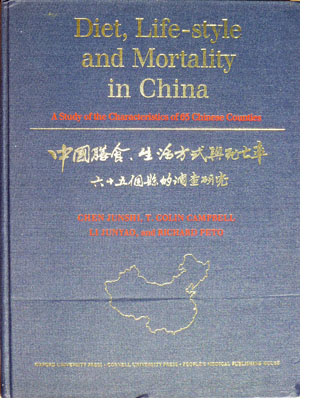
I recently finished reading the China Study: Startling Implications for Diet, Weight Loss and Long-term Health by Dr. T. Colin Campbell and his son Dr. Tom Campbell. I have been intrigued with the book for quite some time, however for some reason the 400 page monograph seemed daunting. While still 400 pages, the book is a distilled and truncated version of Dr. Campbell’s and Dr. Chen Junshi’s Diet, Life-style and Mortality in China which clocks in at a massive 894 pages. The New York Times called this study the “Grand Prix of epidemiology" and the "most comprehensive large study ever undertaken of the relationship between diet and the risk of developing disease."

This book is a powerhouse of fair, balanced, and evidenced-based nutritional information, which makes the book standout when it is placed among “diet” books on shelves in bookstores. Containing nearly thirty pages of references and three appendixes with more detailed information, the book is clearly the result of a lifetime (over forty years in Campbell’s case) of research in nutrition.


Background:

T. Colin Campbell’s story is interesting on its own and he includes a large part of his story in the final section of the book. He grew up on a rural dairy farm. Perhaps ironically, his father died quite young of heart disease. As the first in his family to attend college, Campbell studied pre-veterinary medicine at Pennsylvania State University. He obtained his B.S. in 1956 and then attended veterinary school at the University of Georgia for a year. During that time he became increasingly interested in the diets of humans, changed tracts, transferred to Cornell,  and finished his Ph.D. under Clive McCay (a famous researcher of diet and aging) in 1961. He then went to teach and research at MIT and later Virginia Tech, but ultimately spent the majority of his career in the nutrition sciences department of his alma mater, Cornell.

His early research focused on malnutrition and protein, which brought him to Indonesia, to study diet and lifestyle. While there he began to notice, that contrary to his then working hypothesis, the more animal foods one ate, the more likely the person would suffer from cancer. Up to this point, Campbell firmly believed malnutrition was the result of a lack of animal protein from a persons diet. However he soon began to question this hypothesis and the result dramatically altered his career. Finally, while he was in Indonesia, Campbell read a small and obscure paper published on cancer and animal protein in mice and rats, which observed that cancer grew more rapidly when a diet contained higher levels of casein (the main protein found in cheese and dairy products). Even more important, a diet low in animal protein could stop and even reverse the growth of cancer cells.

Campbell returned to the States and recreated the experiment he read about. It amazed him. He then spent the next thirty-five years furthering the field along this path while winning some of the most prestigious awards for research along the way. However, his most remarkable work remains the China Study.


The Study

In the early 1970s, the premier of China was diagnosed with terminal cancer. As a result, he ordered a nationwide survey to collect information on the disease and its impact on the Chinese population. Between 1973-75, the surveys were collected. It was a monumental study of death rates for twelve different kinds of cancer for more than 2,400 Chinese counties and 880 million (96%) of their citizens. The end result was an atlas showing where certain types of cancer were high and where they were almost nonexistent. The atlas made it clear that in China, cancer was geographically localized. “Some cancers were much more common in some places than in others.” This was significant because the variations existed within a country where 87% of the population was of the same ethnic group, essentially taking genes out of the equation of cancer risk. Because there was such a massive variation in cancer rates among different counties where genetic backgrounds were similar from place to place, it seemed possible that cancer could be connected to environmental and lifestyle factors rather than genetics (it is estimated that genetics determines only around 2-3% of the total cancer risk- “Genes do not act in isolation; they need a trigger for their effects to be produced”).

China proved the perfect place to study cancer and lifestyle because “critical to the importance of the China Study was the nature of the diet consumed in rural China.” It was a rare opportunity to study health-related effects of a mostly plant-based diet.

This sparked Dr. Campbell’s interest and in 1983 an international team of biochemists and scientists were working closely to find correlations between the cancer atlas and a new, large collection of dietary surveys and blood work. Between 1983-4, they collected data on 367 variables from 6,500 people living in 65 different counties, and then compared each variable with every other variable. The results were astonishing. They collected over 8,000 statistically significant associations between lifestyle, diet and disease variables. Not surprisingly, the more animal protein that was consumed, the greater the risk for contracting a number of different diseases, including several different types of cancer, heart disease and diabetes. They also compared Chinese populations to American populations of similar activity levels and found that on average the Chinese consumed 30% more calories based off body weight than Americans and yet found their body weight was on average 20% lower.

While Dr. Campbell is very forthright about the fact that “absolute” proof of causation is almost impossible in scientific studies, his book leaves little doubt about the correlation between diet and disease. The study emphasized a whole-food plant based diet while also eliminating all meats, poultry, fish, eggs and dairy products (Dr. Campbell identifies dairy as one of the most potent carcinogens that humans are exposed to). They claim that eating a healthy vegan diet will help one escape, reduce or even reverse the development of chronic disease.

The Actual Book

 In this work, Dr. Campbell has set an ambitious goal: “I propose to do nothing less than redefine what we think of as good nutrition.” The book is divided into four sections, but for simplicity it can really be divided into three parts.

The first section reviews some of the ground I’ve already covered. Dr. Campbell’s transition towards and advocacy for a plant based diet, his early work on mice, casein, and tumor growth and the China study. Just from this section alone, Campbell builds a compelling case linking the consumption of animal protein, cholesterol, and processed foods to increased cancer risks. However, in section two Campbell goes into a detailed review of the peer-reviewed secondary literature dating back to the late 1800s, which demonstrates how animal protein is linked to nearly every other major western disease (also know as diseases of affluence).

In this section, Dr. Campbell and his son have done extremely diligent work. Each chapter relates to a different major disease and how diet and nutrition can affect that disease. These chapters include heart disease with an extended discussion of the work from Dr. Esselstyn and Dr. John McDougall, obesity, diabetes as well as more surprising chapters on autoimmune diseases, bone health, and kidney, eye and brain diseases.

In each chapter, Campbell discusses the newest research on the causes of these diseases. By this point in the book, it is no surprise that animal products are intimately linked to each one. For instance, it now seems the autoimmune disease known as Type 1 diabetes, previously thought to be a genetic issue, could actually be triggered by exposing newborns to dairy milk (perhaps in infant formula) too early in their lives. In fact a study done in Chile found that children weaned too early onto cow’s milk-based formula had a 13.1 times greater risk of contracting the disease. This is because most newborns are unable to fully digest the small amino acid chains or fragments of the original protein found in milk and remain in the intestines and absorbed into the blood. The immune system recognizes these fragments as foreign invaders and goes about destroying them. Unfortunately, some of these fragments look exactly the same as the cells of the pancreas which makes insulin. As a result, the immune system will also start attacking the cells of the pancreas and the body will no long be able to produce insulin. The result is a devastating disease that the child will have to deal with for the remainder of its life.

The final section focuses on why this information isn’t more common spread. The answer is surprising obvious. Imagine for a second a newspaper headline about Cows milk causing Type 1 diabetes? It would have a dramatic financial implication for American agriculture. Obviously the entire food system would be greatly impacted. As a result there a barriers built into the system to help protect against that from happening. But is it a conspiracy? According to Dr. Campbell, no it is not. Rather, he claims it is simply the powerful work of a few people favoring the status quo over  sound science.

Unfortunately, part of the status quo means that the majority of nutritional information is filtered through three different levels. First are the scientists, many of whom have close ties to the food and drug industries as their departmental positions are funded in part by various corporations, the result, according to Campbell, are nutritionists become less interested in challenging a system which literally supports them. These scientists are also the most likely to be placed onto governmental committees as "experts" who are responsible for creating acceptable nutritional standards. 

Second is government. Perhaps the saddest of the trio, the government has consistently put economic issues and corporate interests in front of protecting their citizens’ health. This is evidenced every time a major governing body fills committees with lobbyists rather than scientists or when lobbyists are successful in their attempt to bury an honest report. Just think back to the most recent farm bill debate where tomato sauce ontop of pizza was defined as a vegetable and pink slime was found to be nutritionally acceptable. 


Finally, Campbell points his wagging finger at the corporations who fund most of the nations nutritional research. These corporations are broad in their range as well as their influence. Obviously, the meat, dairy and egg industries are powerful, but Campbell also reminds his readers that the orange industry has been startlingly successful at identifying their product with Vitamin C. Not only that, but drug companies sponsor most medical schools in the nation. 

One does not need to have an overactive imagination to imagine what this trio has caused to those who eat the Standard American Diet. Campbell claims this is one of the largest threats to America's future security as a nation, as healthcare spending dwarfs even the swollen military budgets yet the population becomes increasingly less healthy. Campbell’s theory is more than plausible as he details his own personal struggles from within the scientific community. Indeed it is often hard to believe his career was not squashed by these powers while he was still in Indonesia.

The book details the struggles that Dr. Caldwell Esselstyn and Dr. John McDougall  faced as well. Dr. McDougall was threatened with expulsion from his residency when he counseled a heart patient with advice about nutrition.  Dr. Esselstyn, a top surgen at the Cleveland Clinic, was ostracized by his peers and his plea to help Cleveland’s medical school develop a plant-based healing center have consistently been ignored. Still both have remain steadfast and have been able to help thousands of people heal themselves of heart disease and diabetes through diet.


It seems possible that some of Campbell’s claims are the result of overreaching from the actual evidence; after all, correlations are not causation. But its more likely that Campbell’s work is really that definitive. Campbell prides himself on the fact that he is nothing if not a careful and cautious scientist and while his book is written for a general audience, in the three appendixes Campbell goes into further detail about his protein studies in rats, his China Study, supplementations and Vitamin D – all of which were highly provocative as well as useful. When one considers the large amount of supporting secondary research Dr. Campbell relies on, it becomes nearly impossible to ignore his findings.

While the book has had it’s fair share of critics (many of which have been responded to personally by Campbell), it has met the praise of some of the most serious researchers in the field including Dr. Wilfred Niels Arnold from the University of Kansas and Professor Hal Harris of the University of Missouri–St. Louis who actually converted with his graduate students to a whole food, plant-based diet after reading the book. CNN’s Sunjay Gupta claims the book had a similar impact on him in his documentary called The Last Heart Attack. Campbell’s admirers also include President Bill Clinton, Oprah, Dr. Oz and thousands of others around the world. It seems to me that few others have had the impact on human health that Dr. Campbell has had (or, ironically, for animal rights, something Dr. Campbell does not vocally support). There are few books which can literally save your life, this is one of them and it should not be ignored. 


Monday, December 12, 2011

The Little Red Book: A Brief Vegan Nutrition Manifesto.

Yes, your diet of pasta is killing you! Well, it's killing you less quickly than a diet of meat and dairy, but more quickly than a more nutrient-packed diet of whole fruits, vegetables and legumes. Athletes need to be especially conscious of what they put into their system because of the demands they make of their bodies. As such, you want everything you put into your system to work for you, not against you. How quickly your body recovers between workouts is closely linked to the nutritional value of your diet. When you eat a balance and healthy diet your body will heal itself more quickly, allowing you to trainer harder more often. When you eat foods low in nutrient value your body is expending valuable energy to digest it while getting little back in return. 

Preferably, a high fiber, high carbohydrate, high protein, alkaline-forming food.


One thing athletes want is a diet that is easy to digest. This typically means eating food with as little processing as possible. While you do not have to completely give up processed foods and eat only a whole plant diet, simply decreasing processed food intake and increasing your nutrient rich whole food intake can greatly increase your energy and performance levels. 

Yes, you can still cook your food. In fact cooking makes many nutrients more absorbable than in the raw state. Rather, what a whole food diet means is you are eating your food as close to nature as possible. No modified corn starch, no processed sugars, no junk. Rather than eating pasta, a highly refined food, try eating beans or spelt, an ancient, less refined and more nutrient-rich form of wheat. These foods are high in carbohydrates to give you fuel for long rides, but are still densely packed with macro and micro nutrients! Personally, I believe lentils and other legumes (chickpeas, split peas and kidney and navy beans) are super foods for endurance athletes and should compose a majority of their three main meals. They have a perfect complex carbohydrate to protein ratio to help build muscle and recover between workouts. Soaking legumes for a few hours and washing them throughly helps increase their absorption, decreases the amount of gas they will produce in your body as well as reducing their needed cook time. I typically put my legumes in a large bowl and soak them in warm water the night before I eat them.


Seeds from sunflowers and pumpkins are also great supplements. Sunflower seeds are 22% protein and offer trace minerals as well as Vitamin E.  Pumpkin seeds are high in protein as well as in iron, an essential nutrient- particularly for athletes. Hemp seeds are also an excellent choice and can be sprinkled on top of anything, added to your favorite sauces or blended in a smoothie. Hemp is sometimes called the "most perfect protein" and for good reason. Containing all 10 essential amino acids, hemp helps boost the immune system and hasten recovery while building muscle!  

You will also want to eat as many greens as you can. Greens have the highest amount of amino acids per ounce, which essentially helps your body digest and utilize protein that will allow it to regenerate your muscles after a long workout. However, be wary. Not all greens are created equal. While greens such as spinach are filled with good nutrients, they have inhibitors that keep your body from accessing their nutrients. As such, foods like kale or collards are far superior. Lightly steaming them will increase the nutrient absorption. 

Pseudo grains such as Quinoa, Buckwheat and wild rice are also excellent to incorporate into your diet. They contain B vitamins, iron, essential amino acids, and are easily digestible. 

You want your food to work for you between meals as well! Try incorporating more fruits into your diet. An apple for instance is a better source of energy than a cup of coffee and offers antioxidants too boot! However, bananas and dates are my go-to food for instant energy. Often, before going for a run or ride I will eat dates and slather on some almond butter (like peanut butter but healthier). Bananas and dates are both high in glucose, a carbohydrate that is rapidly converted to glycogen in the liver providing near instant energy. On longer runs I've actually brought a few dates with me and ate them while running to give me the pick up when I really needed it.


Ultramarthoner and Vegan Scott Jurek eats around 5,000-8,000 calories each day!

Raw and lightly roasted nuts are also great snacks. Nuts are both high in protein and have antioxidants. If you have the inclination, you can soak raw nuts to increase their digestibility.

Not only will all these foods help increase your energy due to their easy digestion and high nutrient value, but they are also high in antioxidants as well as alkaline forming. While the science is still out on this aspect of nutrition, studies suggest that the PH of your body is important. Research is starting to show that an acidic ph can actually harm performance and will increase recovery time (the time needed for your body to heal between workouts). A high Alkaline diet is essentially a diet of leafy greens (kale and collards are my recommendation), legumes (lentils, chickpeas, split peas), pseudo-grains (lentils, buckwheat, quinoa and wild rice) and fruits. Even seemingly acidic foods such as oranges become alkaline forming once digested while toxins such as meat and diary often lower your bodies ph in a negative way, and increasing recovery time needed between workouts. 

The best thing to remember is to do what feels right. These foods are stress-reducing and after giving your body a few weeks to adjust to the new diet you should start to notice an increase in both energy and vitality. Don't stress too much about things like protein. You should get more than enough by eating these foods. Also keep in mind that plant protein is more easily absorbed than meat and dairy proteins, so while meat eaters typically have 20% more protein intake, vegans often have more protein plasma found within their blood. In this case, quality over quantity is what counts! 

That said, calories are essential. And as Scott Jurek said: "And when you're a vegan, to increase your calories as you increase training you need more food. This isn't an elimination diet but an inclusion diet." Vegan athletes don't have to count calories to restrict themselves, but rather to make sure they are getting enough. 

These foods can also help increase your metabolism, helping your body to burn fat more efficiently. Protein, once ingested, instigates the release of a hormone that enables the body to more easily utilize its fat reserves, which in turn will improve endurance and facilitate loss of body fat.


I highly suggest the book Thrive by Brendan Brazier (review coming soon). He is a professional Ironman athlete who has written extensively on nutrition and its connection to athletic performance. I also suggest incorporating these foods into your diet slowly so as to give your body time to adjust to the new routine. 

You may have noticed that at no time did I ever suggest putting meat or dairy into your body. They are not only carcinogens that have been linked to increased levels of life threatening diseases but are also highly acidic once digested and will inhibit your overall ability to perform.