Wednesday, July 11, 2012

Superfood Smoothology


Since I’ve been getting tons of questions about smoothies, I thought I’d finally do a post on them. Smoothies are great on any occasion. Many people prefer to make a large smoothie for breakfast, others use them for a mid-day boost, but I love them as a way to help speed recover and restore energy levels after a hard workout.


Initially, I figured I would just blog the recipes of a few of my favorite combinations; but then I realized that most of my smoothies are made on the fly with whatever goodies I can get my paws onto. As such, instead of sharing a few rigid recipes, I thought I’d share the basic building blocks to the perfect superfood smoothie and leave it to your own imaginations to do the rest. And so here is my basic guide to creating the perfect blend.

Base: 
Water
Green Tea (excellent way to boost antioxidants) 
Almond Milk,
Sunflower Seed Milk (high in Omega 3s)
Rice Milk
Apple Juice
Orange Juice


Berries: (I often use frozen berries) (Antioxidants)
Blueberries
Strawberries
Goji Berries (dried) 
Mulberries  (dried)
Acai Berry Pulp (frozen)
Cherries

Fruit:
Bananas (I often freeze bananas)  
Pineapple
Apple
Mango
Pear


Greens and Veggies:
Kale
Spinach
Collards
Arugula
Beet Greens
Beets
Celery
Carrots

Wheatgrass powder (practically tasteless, navitas)


Nuts: (Proteins and Fats) 
Almonds,
Cashews
Walnuts
Brazilian nuts
Pine nuts

Powders/Spices: 
Vega One and Vega Protein
Sunwarrior
Hemp Powder
Hemp Protein by Nutiva
Pomegranate Powder (made by navitas)  
Amal Powder (Dried Indian Goose Berries. Very, Very High in antioxidants and Vit C.)
Maca Powder (excellent post exercise, helps relax the body)
Raw Cacao (very high source of antioxidants and magnesium which helps relieve cramping)
Cinnamon
Cloves (One of the highest sources of antioxidants)
Ginger (excellent for recovery)
Turmeric (Indian spice, helps fight cancer, helps blood circulation for recovery, must take with black pepper to metabolize) 

Oils: (I only use these on weeks were I've trained really hard and never more than half a teaspoon)
Coconut oil
Hemp Oil
Flax Oil
Olive Oil


Seeds:
Chia Seeds (Add a spoonful of chia to every smoothie to add Omega 3s and fiber to keep blood sugar from spiking from the fruit and sweetners)
Hemp Seeds/Powder (excellent source of protein)
Flax Seeds
Sunflower Seeds


Sweeteners:
Dates
Date Sugar
Dried Figs
Lucuma Powder (navitas)
Sweet Palm Coconut Sugar
maple syrup 
Stevia (use sparingly)
Agave (use sparingly)


You may have noticed that I didn't include any algae. I don't use spirulina (except for the small amount found in Vega). While many believe it is a superfood because it is 60% protein, it has recently been found to breakdown muscles rather than rebuild them, and is has also been linked to liver cancer. Instead, I use to take small amounts of Chlorela when I felt I need the extra push but the payoff didn't seem worth the price, as I replaced it with Kale, which is much cheaper and can be found local!
More on Spirulina can be found here:


Now go get out the Vitamix (or any other blender you may have) and mix and match to your hearts stomachs content.  


Thursday, June 21, 2012

Vegan Doping: Forget Carbo-Loading, Lets Talk Nitrate Loading


By now, I assume you’ve all heard about Lance Armstrong who was recharged with doping last week and is currently suspended from all athletic events including Ironman and is threatened with having his seven Tour De France victories stripped (Armstrong qualified earlier in the season for the Ironman World Championship in Kona.) Rather than going into a rant about if I think he did it or not, the ethics behind doping, how this helps or hurts the sport, or any of the other mumbo-jumbo that is currently trending, I’d rather offer an alternative to people looking to get that extra little push from their training that is not only legal but is also incredibly healthy.

(Side note: Regardless of what he did nearly a decade ago, his performances in recent Ironman competitions have been stunning, and Armstrong credits his new experiments with plant-based veganism for much of his recent ability.) 


Several new studies over the past few years have found that a diet high in beets can actually do amazing things for athletes, including drastically improving performance. In the past I’ve written about how plant-based diets can lower inflammation allowing an increase in training, as well as increased energy and stamina all while decreasing your risk of many lethal diseases. But the power of beets seem to leave even these attributes in the dust.
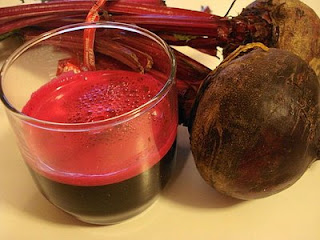

In 2009 a study found that beet juice has the ability to dramatically lower the muscles need for oxygen. The reason athletes train is to strengthen their heart and lungs. As this happens the body becomes more efficient, delivering more oxygen throughout their system allowing their muscles to perform more work. However, no matter how good of an athlete a person is, once the oxygen reaches the muscles, it does the same amount of work. Superior athletes only advantage is the ability to pump more oxygen to their muscles more quickly and efficiently. This can be compared to a car. A sports car and a normal sedan both use fuel exactly the same, however the sports car will be fast simply because it has a stronger engine which can use the fuel more effectively. However the fuel is doing the same amount of work in both the sports car and the sedan.

At least that is what traditional sports science always told us.


A new study took eight cyclists and measured their oxygen levels while cycling on an indoor trainer. They did the test at several times, including before and after taking placebos, as well as after having consumed two glasses of beet juice for several days. After drinking beet juice for a few days in a row, the cyclists were able to perform the same amount of work with 19% less oxygen. When they were cycling at full pace to exhaustion, they were able to increase their endurance to fatigue by an astounding 16%.

It is worth mentioning that before this experiment, there was no known food, drug, or steroid that could actually increase energy extraction from oxygen.  However, it appears that beet juice made their bodies significantly more efficient.

Why Beets? Well, besides being packed with macro, micro, and phyto-nutrients, beets offer one of the most concentrated sources of nitrates. When compared to berry juice (also packed with goodness, absent the nitrate) performance after beet consumption improved while the berry juice did nothing to affect normal performance. 


This is where it gets a bit complex, so hold on to your hats. After consumption, nitrate is absorbed in our stomachs and then actively pumped back into out mouth through our salivary glands. This is done because our body knows we have special bacteria living on our tongues which takes the nitrates and converts them into nitrites which are then re-swallowed, re-absorbed and finally sent off to the cells in our muscles. Here the nitrites are converted yet again into nitrate-oxide. This nitrate-oxide then helps take the place of oxygen in the muscles, therefore requiring less oxygen to perform more work. Because the nitrate needs to be absorbed by bacteria on the tongue using antiseptic mouthwash or excessive spitting after absorbing the nitrates was found to cancel the benefits.

So if you are preparing for marathon season, have a big cycling event or racing in a triathlon, instead of worrying about carbo-loading before your race, perhaps you should consider a diet high in nitrates, including beets, and dark leafy-greens such as kale, collards and arugula. But be warned, while nitrates found naturally in fruits and vegetables can increase performance, the nitrates added to cure meat (think bacon and hotdogs) are actually highly potent carcinogens that are linked to all types of cancers. This is because instead of turning into nitrate-oxide as they do when nitrates are ingested from beets and dark greens, they convert into nitrosamines. As it turns out, this is because meat is void of vitamin C, which blocks the conversion of nitrates to nitrosamines. As such, the nitrates found in bacon and hotdogs convert into the harmful nitrosamines during the processing stage, making all cured meats harmful regardless of what they are eaten with; while veggies continue to have beneficial affects. As such, perhaps you should consider trading your next BLT for an arugula and beet salad or simply add those ingredients to your smoothies!

(my favorite way to add beets to my diet is by peeling and shredding them)


Besides running a bit faster and a bit longer, beets have other advantages that make them beneficial to everyone’s diet. According to Dr. Mikhail Tombak, a scientist and longevity expert, beets have also been shown to that improve “blood structure and cure diseases of the circulatory system, large intestine, and digestive system." Tombak also says beet juice helps dissolve liver, kidney and bladder stones.

 So what is the take from all of this? Well, athletes will see their performance improve if they ingest a large amount of nitrite-rich foods before they race. Perhaps I am bit of quixotic but I’d like to think Lance was simply benefitting from the power of the beet.

Dr. Greger of NutritionFacts.org has nearly an hour of video lectures on the topic.


These were the most relevant sources considered:
Schorah CJ, Sobala GM, Sanderson M, Collis N, Primrose JN. Gastric juice ascorbic acid: effects of disease and implications for gastric carcinogenesis. Am J Clin Nutr. 1991 Jan;53(1 Suppl):287S-293S.

Webb AJ, Patel N, Loukogeorgakis S, Okorie M, Aboud Z, Misra S, Rashid R, Miall P, Deanfield J, Benjamin N, MacAllister R, Hobbs AJ, Ahluwalia A. Acute blood pressure lowering, vasoprotective, and antiplatelet properties of dietary nitrate via bioconversion to nitrite. Hypertension. 2008 Mar;51(3):784-90. Epub 2008 Feb 4.

Eaton SB, Eaton SB 3rd. Paleolithic vs. modern diets--selected pathophysiological implications. Eur J Nutr. 2000 Apr;39(2):67-70.

Vermeer IT, Moonen EJ, Dallinga JW, Kleinjans JC, van Maanen JM. Effect of ascorbic acid and green tea on endogenous formation of N-nitrosodimethylamine and N-nitrosopiperidine in humans. Mutat Res. 1999 Jul 16;428(1-2):353-61.

Liu CY, Hsu YH, Wu MT, Pan PC, Ho CK, Su L, Xu X, Li Y, Christiani DC; Kaohsiung Leukemia Research Group. Cured meat, vegetables, and bean-curd foods in relation to childhood acute leukemia risk: a population based case-control study. BMC Cancer. 2009 Jan 13;9:15.

Crinnion WJ. Organic foods contain higher levels of certain nutrients, lower levels of pesticides, and may provide health benefits for the consumer. Altern Med Rev. 2010 Apr;15(1):4-12.

Monday, June 11, 2012

Be Somebody: A Book Review of Eat & Run


How often do autobiographies of vegan endurance athletes get published? Well apparently, this summer they are coming out at a rate of every-other-week. Two weeks ago Rich Roll released his Tour De Force Finding Ultra. This week we saw the release of ultrarunner Scott Jurek’s Eat & Run.

Jurek, like Roll, is a plant-based vegan who first came to fame after being highlighted in Born to Run. Similar to Roll, much of his book focuses on how his diet helped him overcome insurmountable odds, including running ultra marathons with broken ankles and toes to become one of the world’s greatest ultrarunning athletes.  

While autobiographical, Jurek keeps his sport on center stage throughout his narrative. Often skipping over much of his life outside of running, the book is really about his journey of training and racing. For instance, Jurek’s first marriage and subsequent divorce only earn a few paragraphs of comment, while entire chapters are comprised of specific races.


He does give a sold account of his childhood, which was largely a lonely experience, growing up in a relatively poor family in Minnesota (he admits his family used “government cheese” during times). Much of his childhood was spent helping to care for his mother, who was afflicted with MS; while also having to suffer the harsh discipline of his father. While Jurek resists the urge to view his childhood with rose-tinted glasses, he does believe that it was the rugged discipline that his father instilled in him at a young age which helped him achieve success as an ultrarunner. His mantra in life was something his father often told him: Sometimes you just do things.


Perhaps Jurek’s happiest memory during that time took place on the slopes. Throughout high school, Jurek was a competitive skier. In fact, he started running as a way to maintain his endurance during the off-season. His best friend, Dusty, who Jurek admits is a more natural athlete, but who also lacked the discipline to train and become a professional athlete, convinced Jurek to enter his first marathon and then his first ultra in 1994, where he placed second, right behind his friend.

By 1998, Jurek was traveling around the country and placing well, if not winning nearly every ultra he entered, often setting new course records along the way. Then in 1999, Jurek began moving towards a vegan diet and won the prestigious Western States 100-Mile Endurance Run. Seen as one of the most difficult races, Jurek won the race an unprecedented seven times in a row, and crediting veganism for much of his success (during his second Western States victory, Jurek was completely raw).


Throughout the book, Jurek’s writing is as fluid and smooth as his running stride. Perhaps the most unique aspect of the book is that Jurek finishes the end of each chapter with a tip on how to improve one’s ability to run and then a recipe. Few books will inspire you more. In fact, throughout the book, only the desire to see what happens on the next page kept me from lacing up my shoes and going for a run. 

At his recent book launch in New York City, Jurek led a fun run which attracted nearly 100 people in Central Park and then packed the seats of the New York Society for Ethical Culture. (He signed my book, “Anthony, Be Somebody.” Doesn’t he know I already am “somebody?”)


Anyway, if you are looking for an inspiring and fun read, run over to your nearest bookstore and pick up a copy of Eat & Run today. Be sure to check back soon, as I plan on sharing on of his recipes. 


Tuesday, May 29, 2012

Finding Ultra: A Review of Rich Roll’s Autobiography


Day one starts with a grueling 6.2 mile open-ocean swim, followed by a 90 mile bike ride through the mountains of Hawaii. Day two is an additional one hundred and seventy miles of steep climbs, fast descents, blazing sun and hard rain on the bike. Day three is a daunting double marathon (52.4-mile run). Totaling three hundred and twenty miles, this is Ultraman. An elite, invite only double Ironman that takes place once a year on the Big Island of Hawaii. This is Rich Roll’s chosen sport and he excels at it.


While Rich Roll was named one of the 25 fittest men by Men’s Fitness magazine, this was not always the case. In fact, as Roll details in his new autobiography, Finding Ultra: Rejecting Middle Age, Becoming One of the World’s Fittest Men, and Discovering Myself, just six months prior to completing his first Ultraman, he was nearly fifty pounds overweight and couldn’t even walk up a flight of stairs without pausing to rest. In this riveting account, Roll bares all, sometimes uncomfortably, displaying his awkward and lonely youth, his struggles with alcoholism and his transformation into a vegan Ultraman. The end result, a read that is as moving as it is thrilling.


Roll’s new book recounts how swimming literally saved him as a child. Socially awkward, Roll had a difficult time making friends. His lack of coordination and ill attempt at sports made him an easy target to pick on for other children. However, he proved to be a natural in the water, which consumed much of his childhood. By the end of high school, he was one of the nations top swimmers. Turning down full-scholarships to schools such as Harvard, and Princeton, Roll picked Stanford University. However, by his sophomore year, alcohol began dismantling everything he had already achieved.

Quitting the swim team and trading in his highly disciplined life for a carefree party attitude, Roll quickly descended into a decade of depression and alcoholism. Even still, Roll managed to be a high achieve, earning his law degree from Cornell. After several struggling years where he came close to hitting rock bottom, Roll finally was able to get himself clean. It was at this time he met his wife Julie, who would not only become his best friend, but in many ways also became his savior. 

Roll is a huge fan of his Vitamix

With her encouragement, at the age of forty, Roll abandoned the average American diet, which was killing him, and completely overhauled not only his diet but also his life. As Roll testified, going from the cheeseburger munching, couch potato to ultra athlete was only possible after adopting a whole food, plant-based vegan diet (He also includes three appendixes on how to become plant-strong). Joining the ranks of an increasingly burgeoning list of vegan athletes, the nutrient-dense foods he began feasting on gave him the energy required to train up to twenty-five hours a week, while also maintaining a law business and raising a family. Relying on the discipline he developed as a child, Rich Roll went from a couch potato to elite athlete in under a years time.  

After his first Ultraman, where he placed eleventh out of thirty five, Roll then joined up with his friend Jason Lester to complete one of the most intense endurance challenges ever attempted. What become known as the EPIC 5: five Ironman distance triathlons in seven days, each on a different Hawaiian island, is perhaps Roll's greatest athletic achievement to date. Concluding his narrative  with the 560 mile journey, Roll demonstrates amazing mental strength as well as physical prowess, and as it turns out, it is also quite the page turner. 

          
                                    man                                                    ultraman


Throughout, Roll keeps the narrative moving with enjoyable and fun prose. While fitness junkies will clearly be drawn to Roll’s account, anyone who picks up Finding Ultra will find themselves engrossed in a great story and may even find the urge to lace up an old pair of running shoes or dusting off the bike sitting in the garage. 

However, Roll's book is so much more than just a good story. The last 100 pages of the book changes tone, and morphs from an autobiography to a well researched and easily comprehensible primer on plant-based nutrition. Roll's principles are not that different from Brendan Braziers' with one glaring exception. Roll consistently reminds his readers that remaining flexible is important. While never advocating anything but a vegan diet, Roll does understand that not everyone will want to be so rigid as to follow an exclusively whole food plant-based diet. He himself admits that he enjoys vegan marshmallows occasionally (Let's hope he is talking about Sweet & Sara!). As such, Roll's work can help a person move towards a plant-based diet without feeling completely overwhelmed, allowing him to connect with a far larger audience than just the elite athlete or strict nutritionist.  

The nutrition primer alone is worth the price of the book, and while it is regrettable that he did not include an index, at least for the primer, the work remains top-tier. While it's impact on the sports world is yet to be seen, I for one am happy to add this handy resource to my collection.

In Good Health,


(I should note all of these photos were found on google.)

Wednesday, May 16, 2012

High Quality H20


I’ve wanted to do a post on this topic for a while and since school is finally winding down (you can practically start calling me master!) I figured there is no better time than now.


Since we were little, we’ve been told about the benefits of staying properly hydrated and as the weather gets warmer, we need to remind ourselves of this truism! Water makes up about 60 percent of our body weight. Our brains are nearly 90% water and every single system in our body requires water for proper function, maintenance and growth. Water can also help flush toxins from our kidneys and liver. It is hard to overstate the importance that water plays in our lives. 

While health experts cite 8 glasses of water every single day as the necessary amount needed to maintain a healthy level of hydration, the truth is that our bodies’ needs are more complex. According to MayoClinic.com, “your water needs depend on many factors, including your health, how active you are and where you live.” The Institute of Medicine determined that an adequate intake (AI) also depends on gender. They state that the AI for men is roughly 3 liters (about 13 cups) of total beverages a day while Women need slightly less, about 2.2 liters (about 9 cups) of total beverages a day. They further state, that perhaps the best way to judge your hydration, is by the color of your urine. While not the most pleasant way imaginable, you want your urine to be clear a pale yellow color.


There are several ways our bodies lose water. Most obvious; sweat. However, one way that we lose water, which is often overlooked, is from exhaling. Every time we breathe out, we exhale moisture from our bodies. Hence, during periods of intense exercise, we lose water both from an increased rate of exhaling as well as from sweating. This makes our need to replace those liquids more necessary. Also, after sleeping for 8 hours, (hopefully breathing the entire time) our bodies exhale a significant amount of liquid and as such we are typically slightly dehydrated upon waking. Try drinking a glass of water within the first half hour of waking up to replenish your fluids and jump start your day.

Vegan Ultraman Rich Roll rehydrating in Ultraman 2011 

Athletes should pay special attention to their hydration. Since water transports nutrients and oxygen into our cells, it is especially important to be well hydrated during and after exercise. It has even been shown that being well-hydrated will help not only performance but also recovery. Due to higher volumes of perspiration, endurance athletes may also want to replace lost electrolytes. If you choose to do this, add a pinch of salt and a few ounces of lemon juice to your workout drink to make sure you are replacing both the electrolytes as well as potassium and calcium to keep your bodies pH even.

Does adding a slice of lemon or lemon juice to water increase the benefits? Some claim, including vegan professional Ironman athlete, Brendan Brazier, that doing this helps alkalize the water, helping to raise and neutralize our bodies pH level. Some proponents go as far as claiming that this can neutralize acid in your bloodstream, boost your metabolism and help your body absorb nutrients more effectively while also helping to prevent disease and slow the aging process. However, according to Katherine Zeratsky, (RD, LD.,) researchers haven't verified these claims. As such, there is no real need to do this, although it does add some vitamin C to your beverage and can help improve the taste.

Vegan Ultramarathon runner Scott Jurek, double fisting!

Besides water, there are other ways to hydrate. Food, particularly fresh fruits and vegetables can have as much as 90% water per calorie weight. Many people get as much as 20% of their daily liquid needs from foods. Also, other beverages like tea are great ways to hydrate as they also contain powerful antioxidants and vitamins. That said, water has some additional benefits making it more valuable. First, it has zero calories and is relatively inexpensive. It has also been shown to help boost the metabolism, whiten and clean teeth, and even helps keep our skin healthy and young looking.

Carrying around a reusable bottle is a great way to always have fresh, clean water with you, making staying hydrated easy. 

Jurek again. He really does love promoting hydration! He also has a new book coming out soon!


I hope you will all join me and raise a glass... of water
see you out there.

alz


Friday, April 27, 2012

The Big Kale Contest by Yum Universe

I have been incredibly busy with work, finishing school and searching for a new job. As such I don't have any tidbits of brilliance for you this week. Rather I will simply leave you with this link to The Big Kale Recipe Contest by Yum Universe. I personally haven't tried any of these recipes, yet they all look divine! As Rip Esselstyn recently wrote in the New York Times, "It's a piece of kale to become plant strong in 2012."


In good health,

The Big Kale Contest